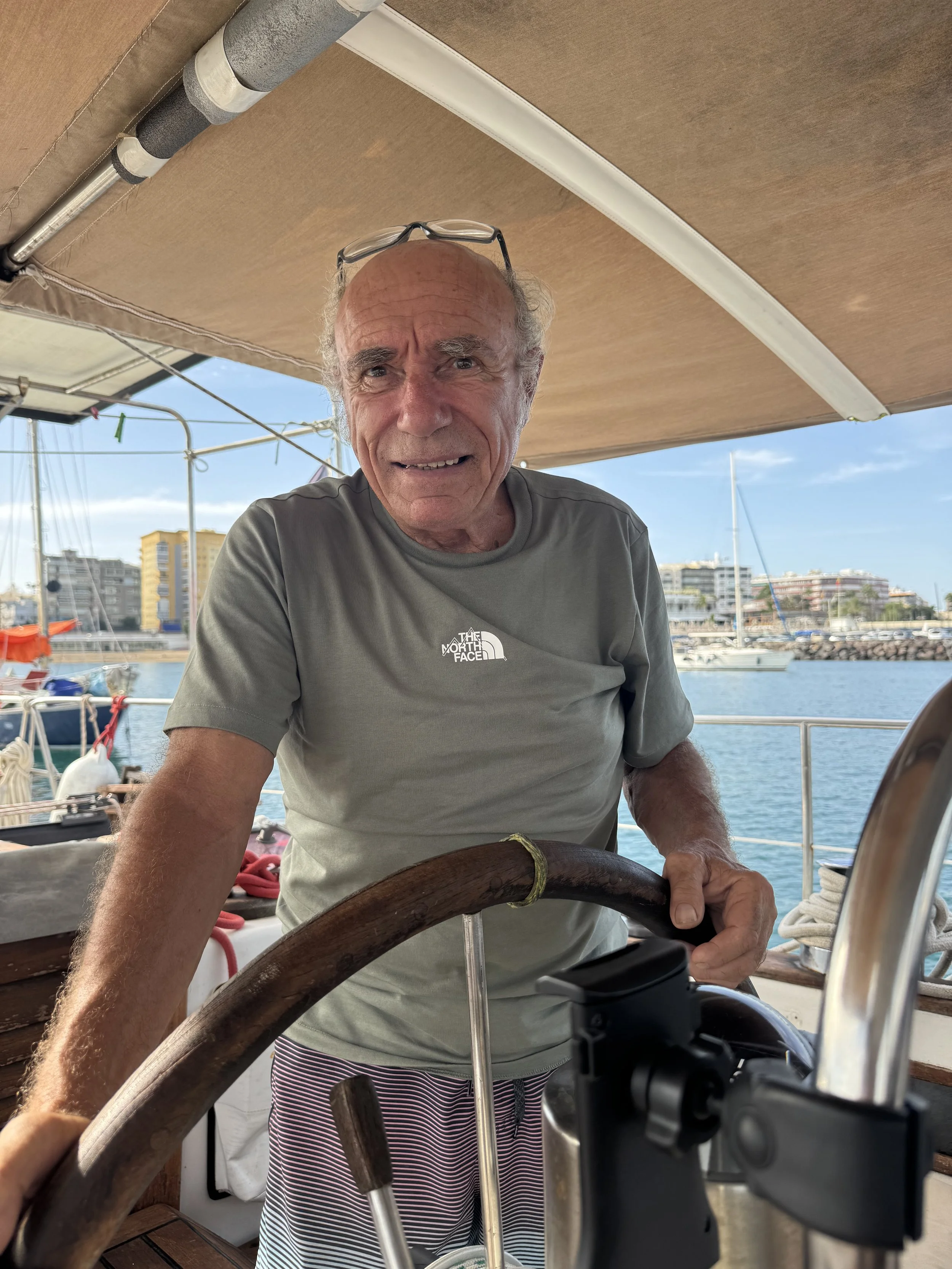
A lot more than meets the eye.
We had just anchored in the bay outside Las Palmas Marina on Gran Canaria when a man on a dinghy approached our boat. “Your boat is just like mine, a Peterson!” There are not many of our boats out there, so it’s always a pleasure to meet a “relative” of Bluesiana. His Ali Baba was a Kelly Peterson 44, built in ‘80. We invited him aboard and found out there is a lot more to this guy than meets the eye. His name is Guy, he is is 77 years old, in good shape, and has had quite a life.
Early Life
Where were you born?
Guy: In Morocco. My parents were French and went there to build a life. They stayed about 25 to 30 years.
Were all the children born there?
Guy: Yes, all of us.
When did you first go sailing?
Guy: As a kid, around age 12, on a small river, through school. I loved it. My village was near a big river close to Rabat, so it was easy to row and sail small boats.
How long did you live in Morocco?
Guy: Until I was 18.
Did the whole family move to France then?
Guy: Yes. My father had to leave around the time of Moroccan independence, and the family resettled in France, in a town between Saumur and Montsoreau.
What did you do once you were in France?
Guy: I passed my baccalauréat, then studied history and geography for five years at the university in Tours.
Family
Tell me about your partners.
Guy: My first wife Bernadette was an English teacher. We had one son and we lived in a small town that I hated. There was nothing there for me. My second wife was Caro, and we had two daughters together
From Carpenter to Boatbuilder
What did you do next?
Guy: I did my compulsory military service, then decided to work with my hands. I became a carpenter and furniture maker. I worked for a company for about 10 years, making tables and boats.
When did boats become your real passion?
Guy: Boats stayed on my mind the whole time. I opened a small workshop and decided to build a wooden boat myself. I looked for a naval architect to design it and found a very good one with many models to choose from. I built a “C50, Jojo special” with a centerboard that goes up and down, not a fixed keel.
Did you work on boats professionally after that?
Guy: Yes, I worked professionally for a year and built a boat for Morocco. After that I kept building boats in my workshop. When I met Veronique, my third partner, and we sailed to La Rochelle together.
What was life like in La Rochelle?
Guy: I lived on my boat in the marina and worked at a very well-known boatyard. I learned to build models with different materials and made several boats, including one very large one, around 30 meters. I also became a diver and did safety and security diving work in caves and on large sand banks.
How old were you then?
Guy: About 30.
Did you take any big trips from La Rochelle?
Guy: No, because of work. We only had one month of holiday a year, so we took a lot of small trips in Brittany. My daughters loved sailing too.
What happened after that?
Guy: I kept learning and working at the boatyard, and eventually I took over and ran my own boatyard.
The Big Voyages
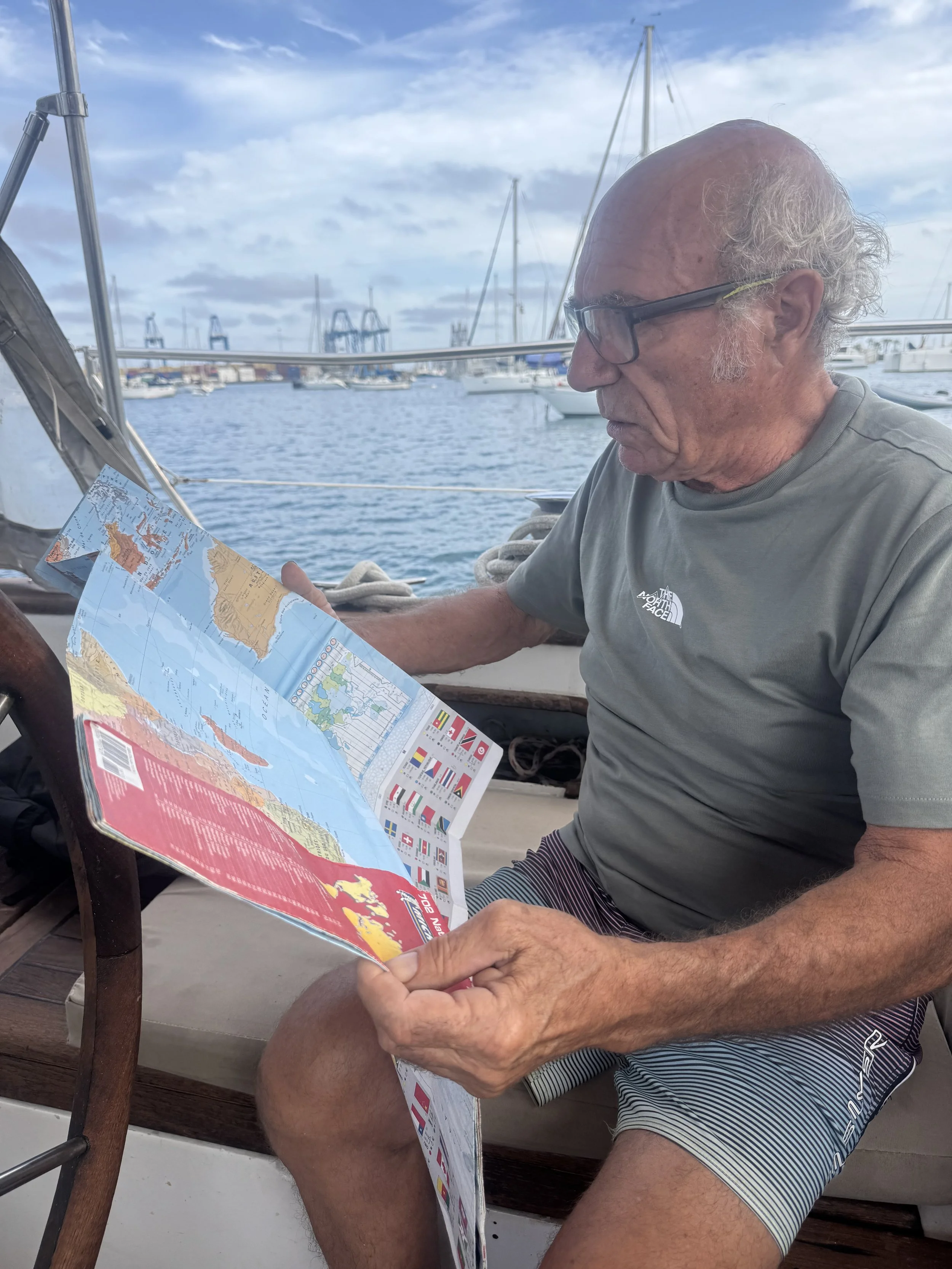
What was your first big trip, and on what boat?
Guy: I started with a small boat, about 10 meters.
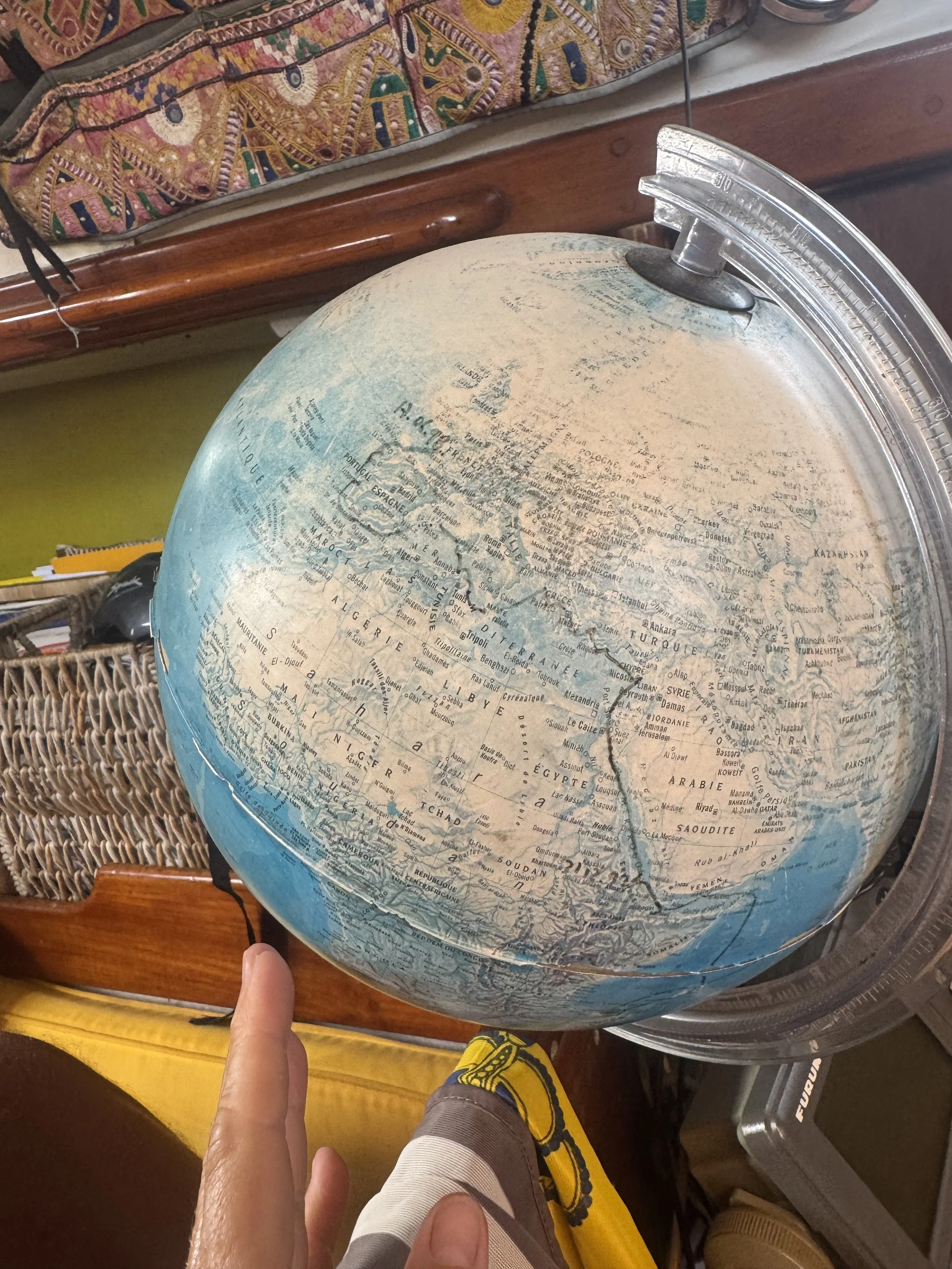
His globe with past travels mapped out
Where did you go?
Guy: I started in the Atlantic, crossed the Mediterranean, went through the Red Sea and the Indian Ocean, then Malacca, Singapore, the Philippines and Japan. From there I went north through the Aleutian islands to Alaska, and finally to Vancouver. That was my second trip.
Then what happened?
Guy: In Vancouver, my partner said “no more.” We had sailed for 15 years, and we had also spent about 15 years working to pay for the boat and the travel, so it was around 30 years in all.
What came next?
Guy: I went to California, then sailed solo from Baja California to the Marquesas and Tahiti. After that I sailed with surfer friends to Fiji, then solo to New Caledonia. I spent six months back in France working, then sailed solo from New Caledonia to Australia.
Why did you head south around Australia?
Guy: Going north through Indonesia was very hard. Going south along the Australian coast was long and difficult too. I decided to return from New Caledonia by the southern route.
Did you sail alone?
Guy: No. My crew was a remarkable Russian woman named Jane who had lived in France for years. She was very strong, caught fish, and was a motor-sport photographer. We had no love story, no time for it. She only had a few days left on her visa when I found her.
What was the passage like?
Guy: Very hard. There was a lot of wind and big waves, and we had to avoid storms, so we could not go straight. We hand-steered for 40 to 48 hours in some stretches because the sea was too rough. With two people, we took turns sleeping a couple of hours at a time.
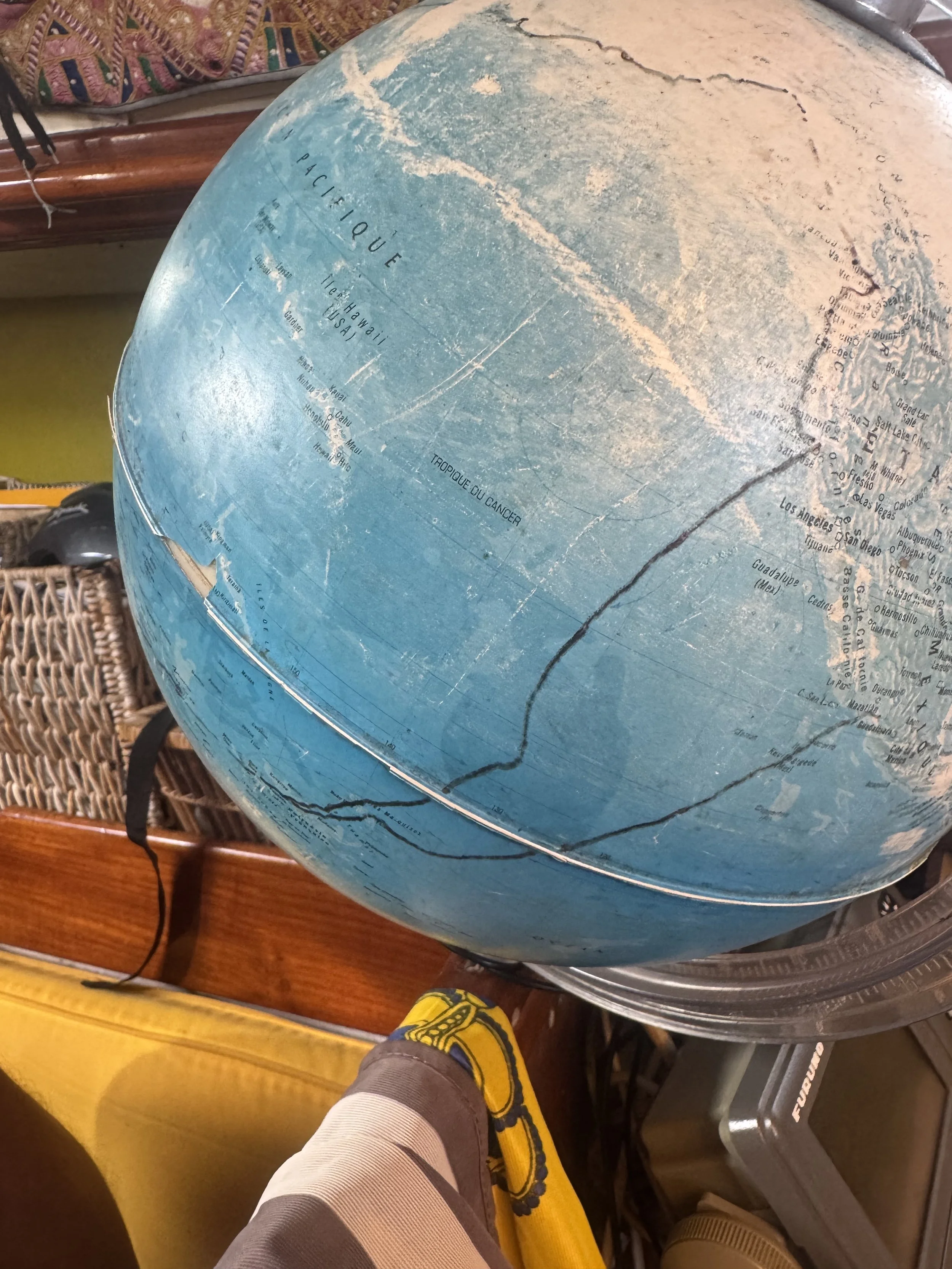
Going far south
How long did it take, and where did you land?
Guy: About 45 days [42 or 45?]. We arrived on a beach in Chile [?].
Anything memorable along the way?
Guy: Point Nemo, the most remote spot in the ocean. There is nothing there, just ocean.
Chile, Patagonia and the Falklands
You have sailed all over the world. Tell me about arriving in Chile.
Guy: I arrived with no engine, and it took weeks to get it fixed. But Chile is very nice, with small fishing villages and wonderful nature. I am alone on the boat here, but my son is traveling with a friend, riding motorcycles south through some very famous places.
You know your son’s friend well?
Guy: Yes. He is a good friend of my son and another boy. They surf, and I surf with them all along the Pacific. They came with me earlier on the leg from Tahiti to Tonga and Fiji, before Chile.
What were your plans from there?
Guy: First I had to finish my trip. The boat was at Puerto Montt. My son’s trip went farther south, and then he had to go back. After that, we were going down Patagonia together, which is very nice. Then I wanted to go slowly toward New Zealand, which I thought would will be very interesting.
After Patagonia, you continued toward the Falklands?
Guy: Yes. The Falklands are very nice, but very, very windy. One night I anchored, and the wind blew 65 knots all night. It was terrible. The anchor chain dragged and we were drifting . I motored twelve miles in one night to save the boat.
Uruguay, Brazil and Home
Then you went on to Uruguay?
Guy: Yes, to the Río de la Plata: Punta del Este and Montevideo. I could not go to Argentina because I was coming from Chile, and Argentina considers the Falklands (the Malvinas) to be Argentine. To enter, I would have had to go to Ushuaia, get a permit, and pay a lot of money, with a lot of paperwork back and forth. It is crazy. So I stayed in Uruguay, in a small, quiet marina across from Buenos Aires.
What did you do with the boat?
Guy: I left it there for six months and went back to France to work. It is a small, very nice marina, and I made friends in Uruguay. When I came back, I sailed with a friend from there.
And after Uruguay?
Guy: I went up through Brazil: Rio Grande, Florianópolis, and on to Salvador, which is fantastic and very African. I stopped at marinas and small fishing villages along the way. Then I found a diving couple, and together we sailed to French Guiana. It was a very long trip because of the wind and the current. The North Brazil Current is very strong and very famous, and it pushes you fast.
Did you continue into the Caribbean?
Guy: Yes, to Tobago, which is very Creole, and then to the French islands. After that I crossed the Atlantic back to Nantes, a trip of about two weeks. I love Nantes, and my daughter lives there, so I made it back in time for her wedding.
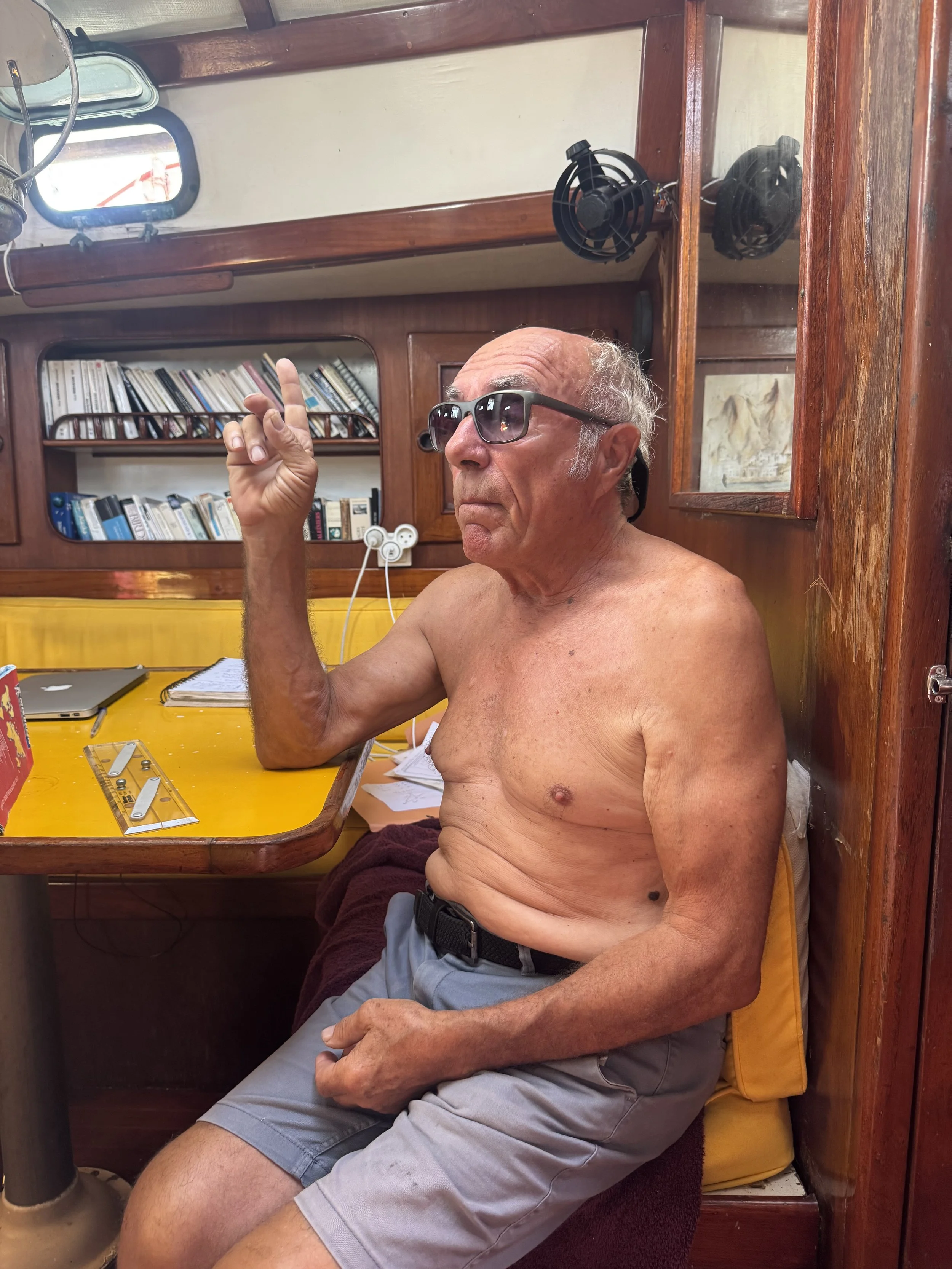
Telling the story from inside his boat Ali Baba
Danger, Pirates and Hard Places
What was the most dangerous or stressful experience?
Guy: The worst was a storm in the Mediterranean near Tunisia. It comes very fast, and I lost my mainsail. That has happened to me twice. I also broke my main in the Pacific, south of the Philippines.
Was sailing in Alaska difficult?
Guy: Not really. Japan was harder, with lots of small boats, fog, and not many commercial facilities. The Philippines and Taiwan were wonderful.
Did you pass through areas with pirates?
Guy: Yes, in the south of the Philippines, which is a pirate area, partly because of the war. I did not go alone. We traveled in a group, though the boats were not all the same speed, so you sometimes lose sight of each other.
Now and Next
Tell me about your family now.
Guy: My son is coming in November with his wife and their two children, who are 10 and 12. They want to do it, of course. They have sailed with me before.we will sail to Cape Verde, then to French Guiana, and then...
Your plan now is to return to the Caribbean?
Guy: Perhaps. But if I start hearing the beat of samba music, that might capture me and I will head to Brazil.
Keep following your own beat, Guy!