Primo: a Vermouth made in Lanzarote… by an Italian
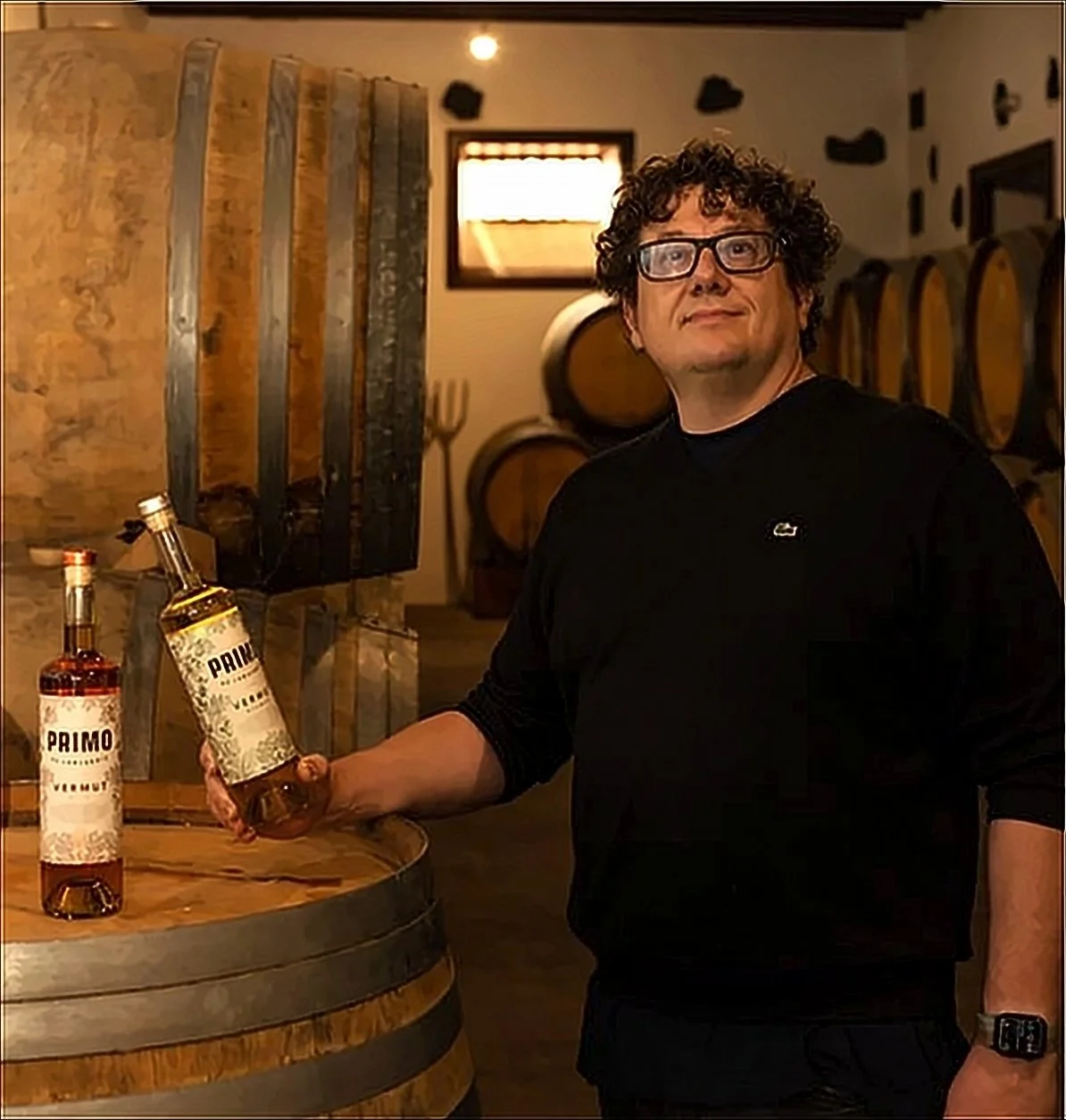
Davide Musci, the creator of Primo Vermut
I met with Davide Musci, founder of Primo Vermouth to find out how it all started
Can you introduce yourself?
My name is Davide Musci, from Caselle Torinese — a lively little airport town (laughs).
How long have you lived here?
I’ve been in Lanzarote since November 2011.
Why did you decide to come here?
After about 7 years — well, after visiting on vacation here once a year, usually in August. I lived in Rome and worked in a restaurant there.
Are you a chef?
No, no, I’m a food lover. So I said, I’ll make my own personal restaurant. I’ve always had a passion for gastronomy. And when we sold the restaurant in Rome, my son had just been born.
But you’re originally from Turin?
Yes. I moved to Rome in 2000 and stayed 12 years. I went there for work — my brother was already there, working in television with Alan Friedman, who did the show on economics.
But there must be a connection, you’re from Turin, Vermouth is from Turin…
When I finally moved here permanently as a resident, I became fascinated by the world of wine here— how it’s cultivated, and the landscape that people created to grow it, and the effort it took. That’s how I got the idea. I realized that in Spain, especially on the mainland — Madrid, Reus, which is sort of the capital of Spanish Vermouth — there’s huge Vermouth consumption. I think even more than in Italy, where most of it gets exported. In my generation it wasn’t common — it’s used more in cocktails, not drunk on its own like here. Here it’s really a habit, a custom — you go out for a Vermouth, and maybe you drink something else too, but that’s the thing.
Let’s taste a little. (delicious, by the way!)
I noticed that here in the Canary Islands there was no Vermouth, so I said, why not create a Vermouth with my own recipe — but using local wine?
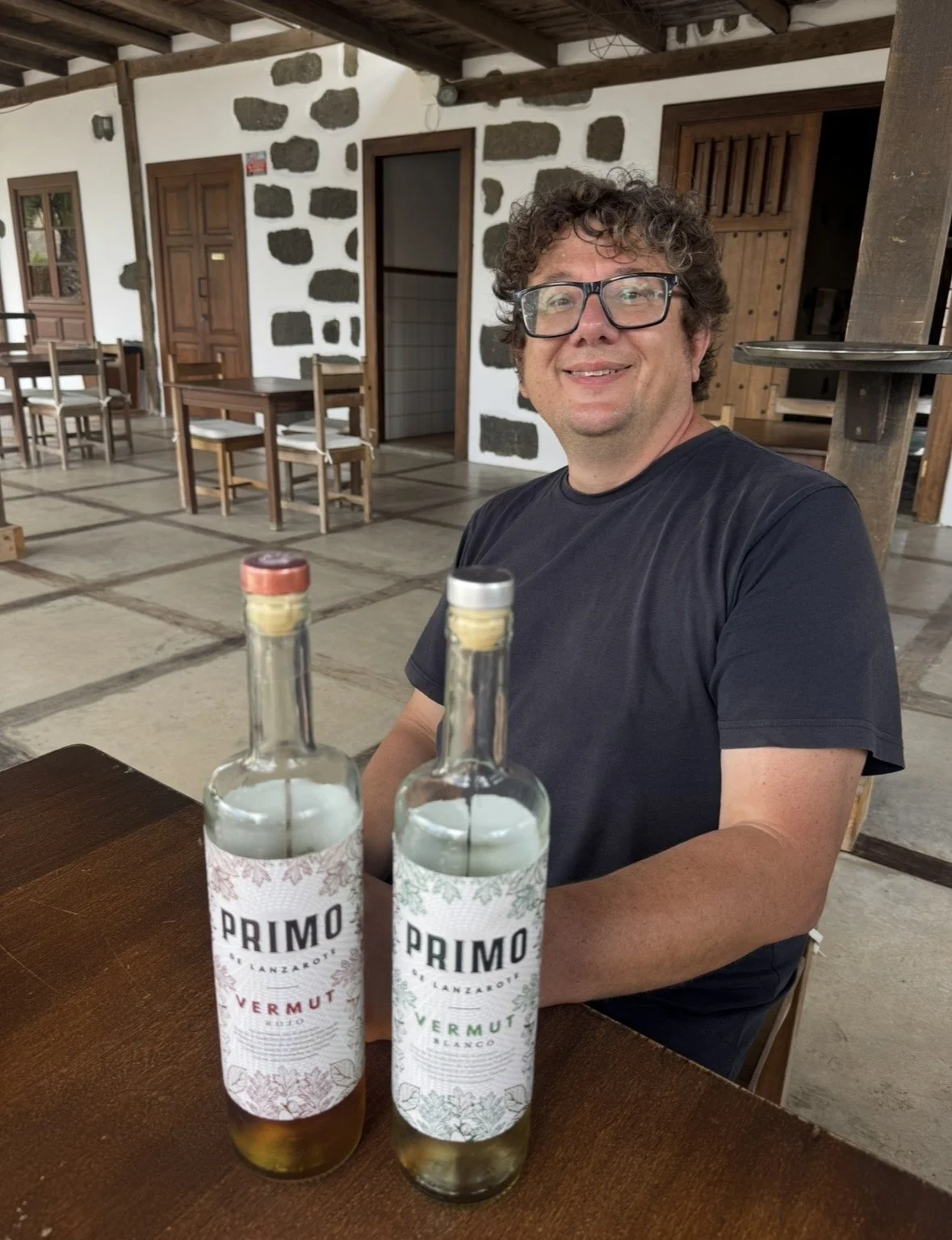
Davide at the Bermejo winery
Did you invent the recipe yourself?
Yes, in the end, yes — after four or five years of trials.
Did you use local herbs?
Some are local, others aren’t — there’s thyme, wormwood, mugwort locally, but I mostly ended up using ingredients from Piedmont. Some spices are from here, like orange peel and Lanzarote grapefruit, coriander seeds from here, Canary sage. Others are spices that have always been international —cinnamon, nutmeg, cinchona bark.
So you did a lot of trials before arriving at the final version. Why the name Primo?
In Italian it has a double meaning: ‘primo’ because it was the first Vermouth here in the Canary Islands, and ‘primo’ because here it’s used as a common way of speaking — a greeting when you pass someone, a way of saying “after you”.
And the alcohol content?
By law, minimum 15 percent. I wanted to give more importance to the main ingredient of Vermouth, which is the wine.
What wine do you use?
Malvasia Volcánica, 100%, Denominación de Origen Lanzarote, from the Bodega Los Bermejos winery, which is a landmark winery here in the Canaries.
And it’s made right here?
Yes, absolutely, with grapes grown right here — production is limited compared to Spain because of how it’s cultivated, the quantity.
The label recalls the botanicals
How many bottles do you make a year?
The last two harvests were terrible — scarce, good quality but low yield. So I haven’t reached 10,000; a few years ago I made a bit more, around 10,000. The product sells out completely, so the challenge is making a bit more. This year the harvest is going better — almost double last year’s.
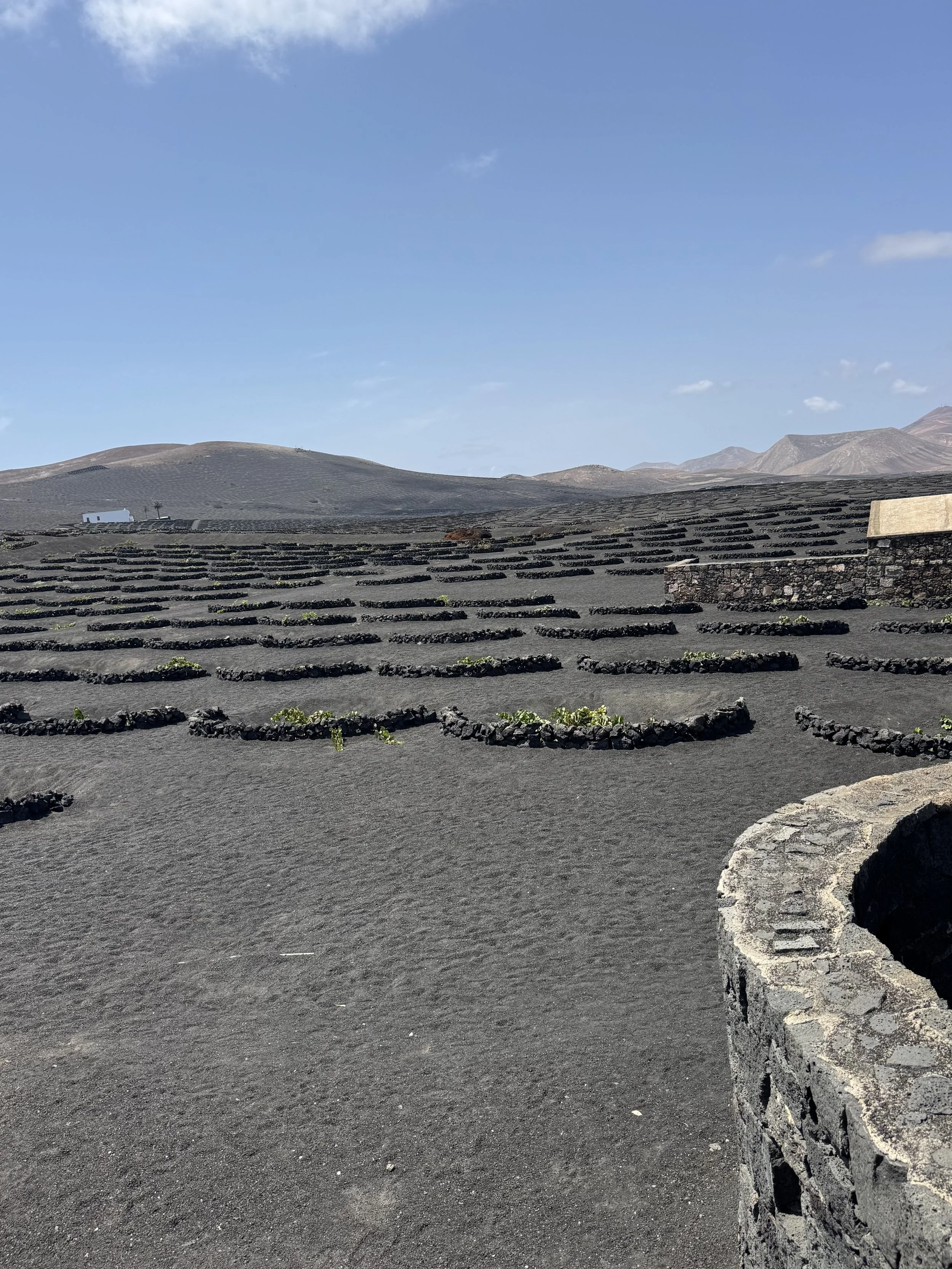
The little protecting walls for the vines.
What kind of climate does a good harvest need here?
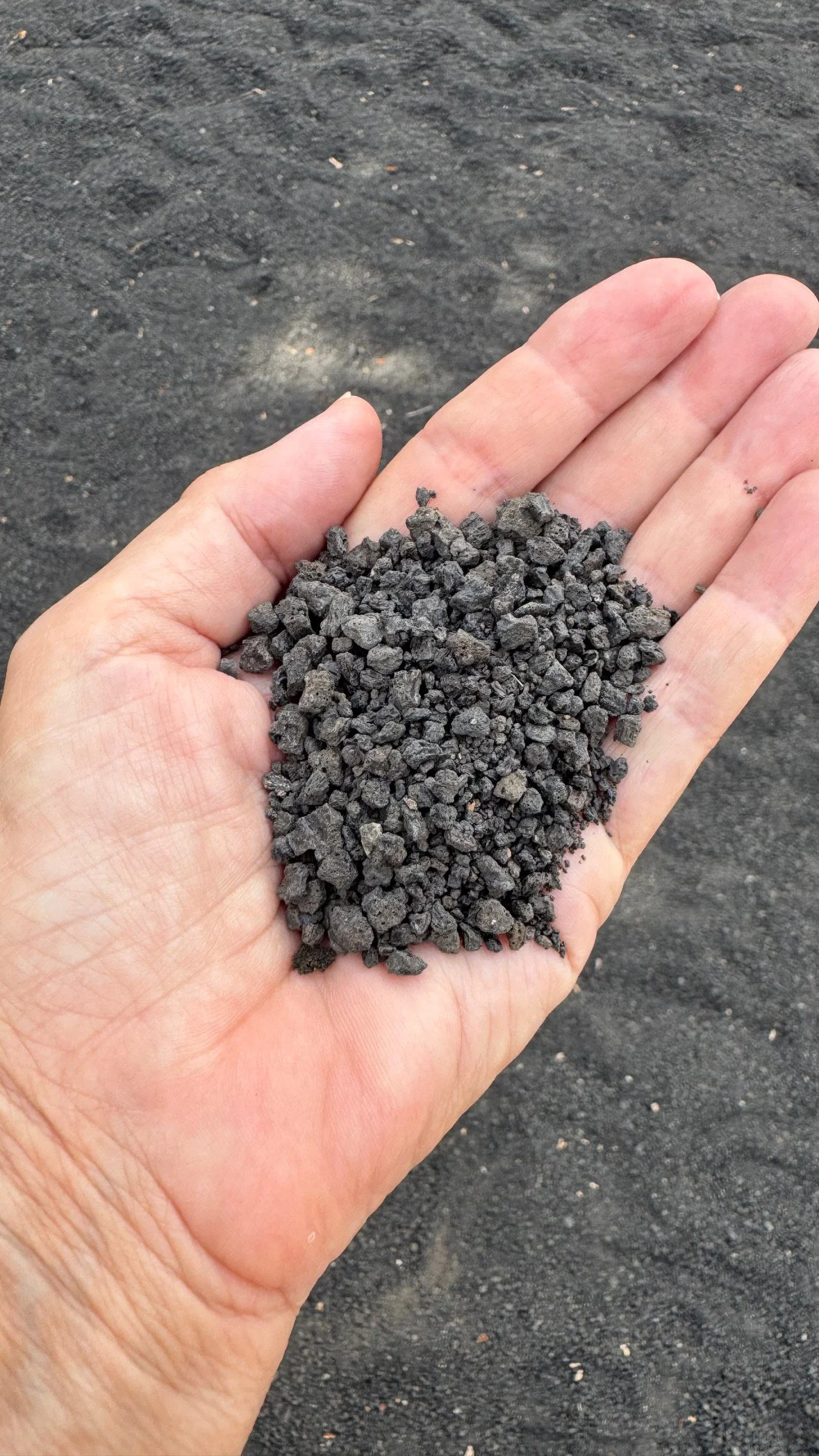
The soil
This year, even though the weather was a bit strange, the harvest yielded a lot. When it goes badly it’s because winters were too warm with too little rain — here it rains about three weeks a year on average.The year before had a bit more rain, and you see the results two years later. This year is unusual because normally it doesn’t rain like it did.
Davide gave us a tour of the Bermejo winery and vineyards. The land is extremely dry with volcanic soil, but there is no irrigation system. Small C-shaped walls are built to protect each vine from the wind, and the ashy soil absorbs the morning dew giving the vines all they need to survive and thrive. It was mind-blowing.
So this year is a good one — are you making the most of it?
Yes, I’m happy, because I survived these last two hard years.
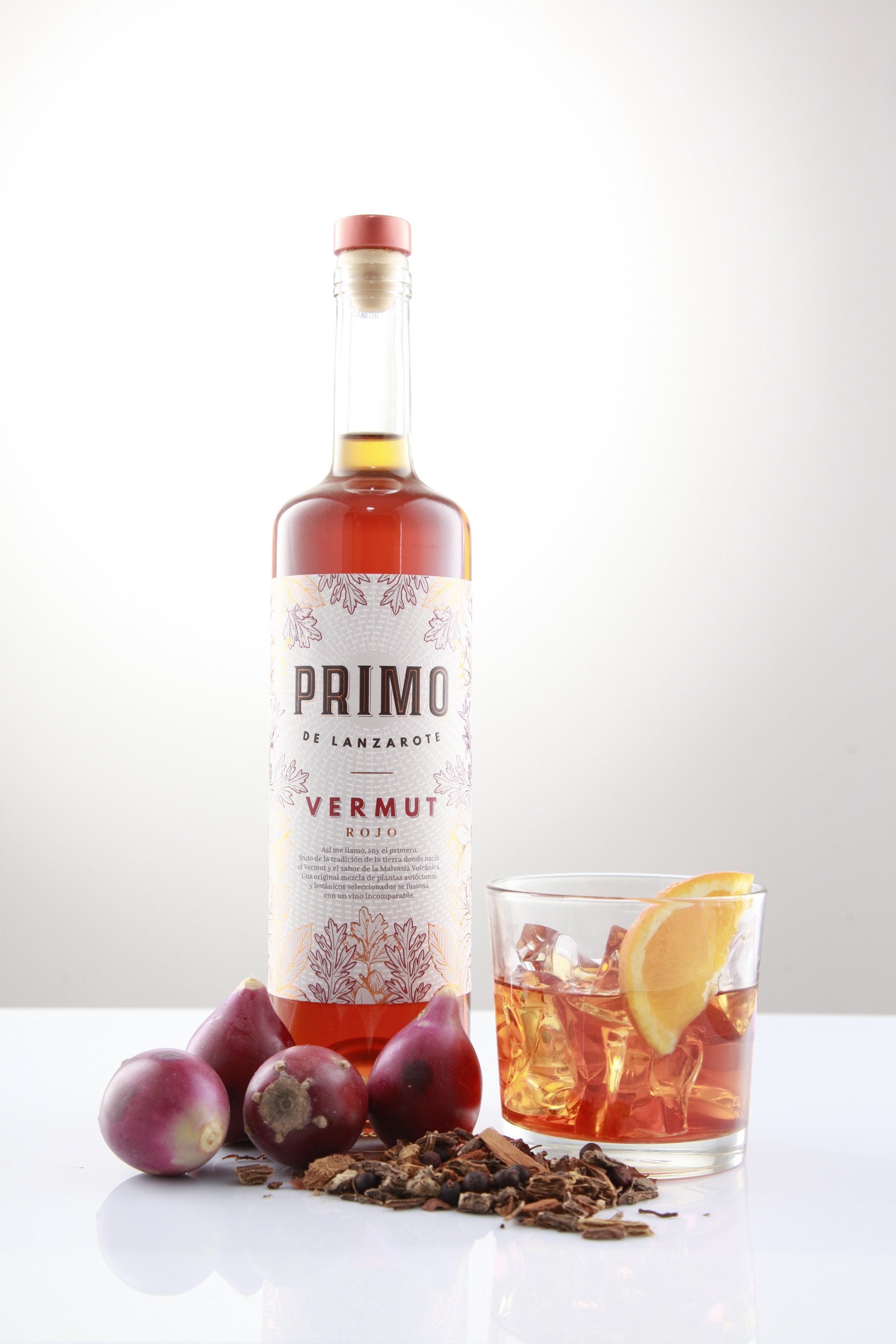
The red variety
The first Vermouth was the white one — when did you make the red?
I made the white first, initially for my own personal consumption — as I always joke, so I wouldn’t become an alcoholic. Then I decided to sell it.
Is the recipe very different from Spanish or Italian Vermouths?
It’s made to my own taste, without any real base of vermouth expertise — I mean, I researched, I studied, but I didn’t take inspiration from anyone. I took inspiration from the wine, because I use an expensive wine, difficult to grow, and I don’t hide it under a ton of botanicals and sugar that just tastes like cinnamon and ends up like syrup. I wanted it to sit somewhere between a wine and a Vermouth — I wanted all the characteristics of the wine to still come through in the Vermouth. I made the red afterward because I like Vermouths that are a bit more bitter, so there’s more gentian and rhubarb — I like Campari too — plenty of gentian, cinchona, and the same base white wine, but colored not with plain caramel like in industrial versions, but with an infusion of prickly pear and palm sap from La Gomera.
You don’t use caramel?
I use very little caramel, which in the end is just burnt sugar — there’s nothing wrong with it. Almost all white and red Vermouths start as white wine and are then colored. I read that in Piedmont, when Vermouth was exported to South America on long sea voyages, the wine would oxidize, so producers decided to give it a fixed color with caramel.
So this gives it an amber color?
Yes, not very dark — it varies, sometimes lighter or darker, depending partly on the yield.. I like that it’s not always exactly the same.
How long does it take to make a batch of Vermouth?
I do a maceration in alcohol, which is then filtered and added to the dry white Malvasia wine that’s already prepared. The macerations don’t last more than two or three weeks depending on the batch. What takes longer is the blending — harmonizing the wine, the alcohol, and the sugar properly.
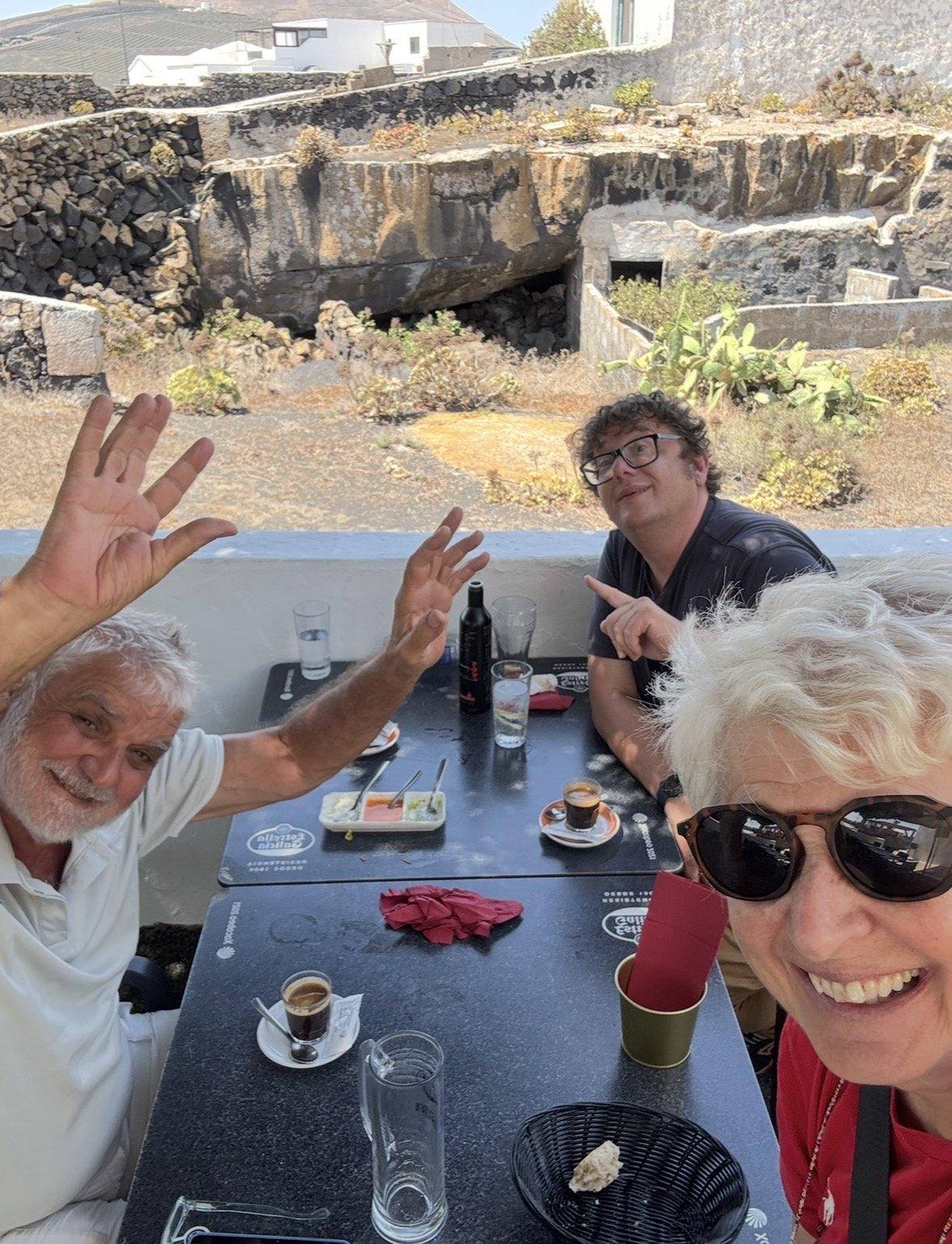
Lunchtime— on our tour with Davide
What is the feedback from consumers?
I’m very happy — first, because it’s become a local, typical product, and there’s a bit of pride in that, since there was no Vermouth here before. The main market is here in the Canaries, above all Lanzarote.I’d like to do more, but production is the issue. I do send some to a distributor in Madrid, a little in Alicante, a bit in England. I sent a pallet to Italy once, but production wasn’t enough to keep up with demand.
So could you make a living on Vermouth production alone?
Yes, that’s possible — it depends on the years and the harvest, so it’s still evolving. I also manage some vacation rental properties for other people. I used to work a lot in real estate — I managed up to almost 100 apartments at one point, but I couldn’t keep up with it anymore.
Do you plan to make other products here?
Absolutely. I started in a smaller winery thanks to a local man who lent me the space. Then, about two and a half, almost three years ago, I partnered with the Los Bermejos winery. That was a point of pride for me, because it’s a winery I’ve always admired — one of the most important here — and it guarantees me quality wine and continuity, plus I now have an important partner who also helps with equipment.
Who does the bottling?
We do it ourselves — myself along with staff from the winery. They have a large bottling machine; mine is smaller, but it works fine.
How do people drink it here?
Mostly on the rocks, straight, with ice — sometimes a splash of gin. Otherwise there’s Spanish influence, especially from the north, where people sometimes mix white and red, or add soda, seltzer, or tonic. But mostly it’s on the rocks with an olive. It also works well in a Martini, in all the classic cocktails — both white and red — in a Boulevardier or a Manhattan, it gives a different, sort of volcanic edge.
Has it had recognition beyond local use?
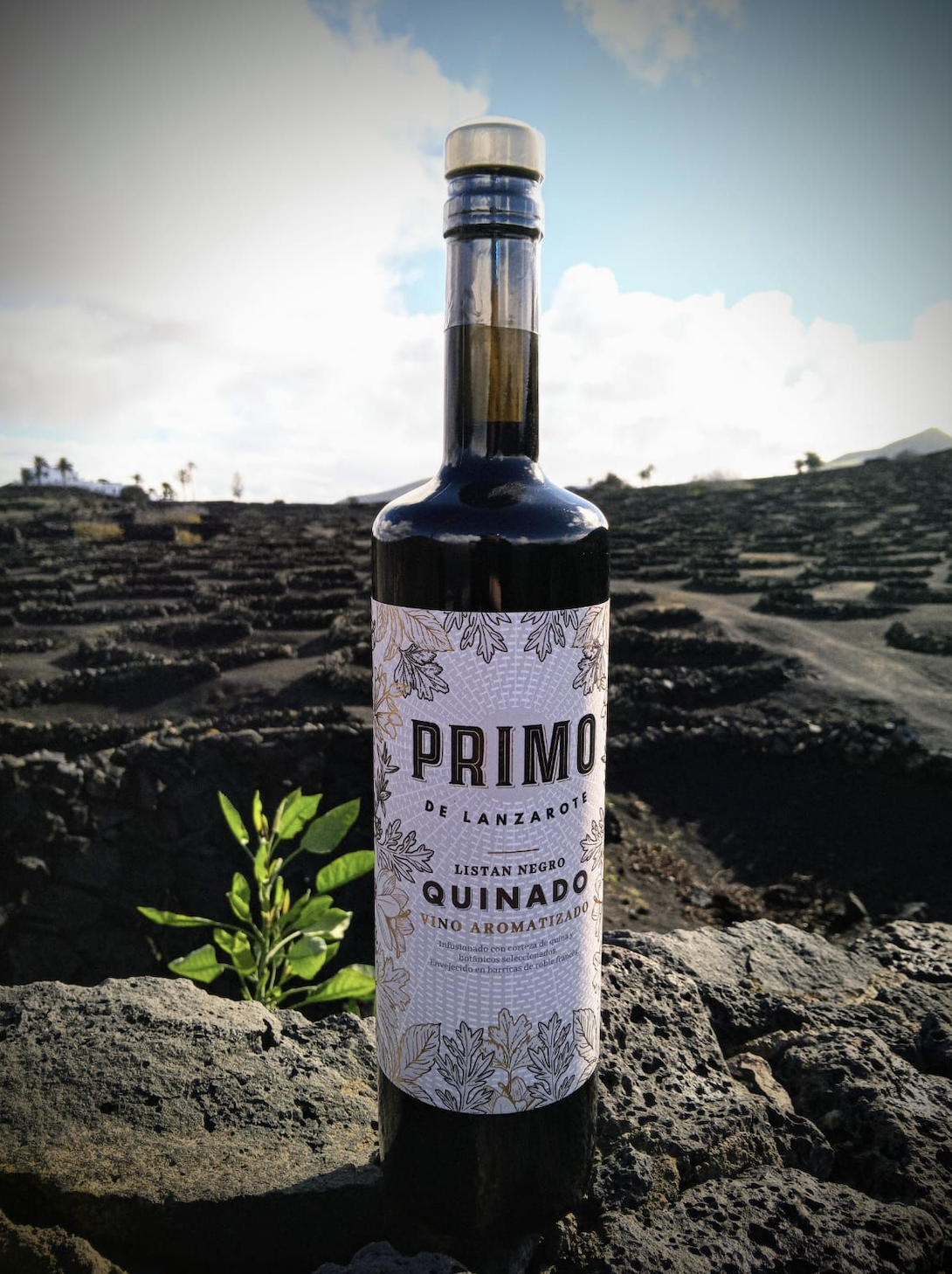
The quinado is delightfully bitter and mellow
A: I’ve been lucky — it’s now used in nearly all the Michelin-starred restaurants in the Canary Islands, and some outside too. Last spring I was in Madrid and met Martín Berasategui, a very important Spanish chef with 13 Michelin stars. He tried it and told me it was the best Vermouth he’d ever tasted. There’s footage of it, but I’ve never used it as advertising. He drinks it chilled, which is nice.
Will you make other products?
Yes — we launched Primo Quinado five years ago and others are in the works..
What inspired Primo Quinado?
Piedmont's Barolo Chinato and the quina wines once popular in Spain in the 1950s and '60s. They were even marketed as an appetite stimulant, a tonic, or a drink for children. The French tradition, such as the white Kina Lillet, also played a part.
What is it made from?
Listán Negro base with a brief passage in barrique, from DO (DOP in Italy) Lanzarote, made in partnership with Bodega Los Bermejos.
Where do you see Primo in 5 years?
Primo is already the reference vermut and aromatized wine brand of the Canary Islands today. The next step over the coming five years is to strengthen distribution — both across the islands and throughout mainland Spain — and finally be able to meet the demand coming from abroad, which right now exceeds our capacity to respond to it.
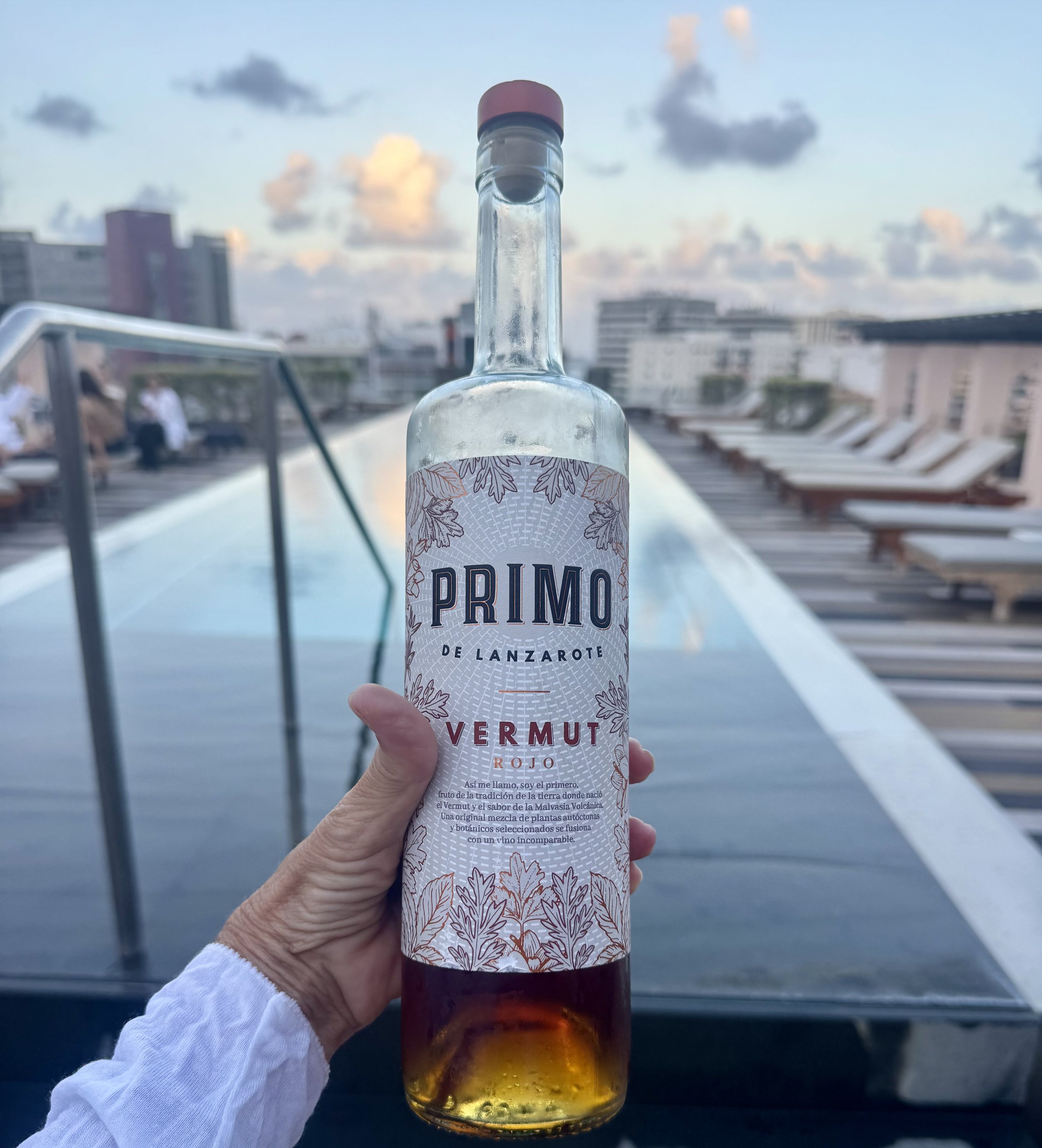
At 5-star Hotel Santa Catalina in Las Palmas for a drink
At the same time, we want to expand the range with original liqueurs, always rooted in Lanzarote's identity and botanicals, and — one day, it's my dream — to move into spirits/distillates as well.
Our goal has always stayed the same: to tell the story of Lanzarote's volcanic terroir through authentic products, and to bring that story further and further beyond our shores.
I am betting that Davide will go full circle and we’ll see Primo on the shelves and bars of Italy very soon!
Links: