The Italian Dream… in the Canary Islands
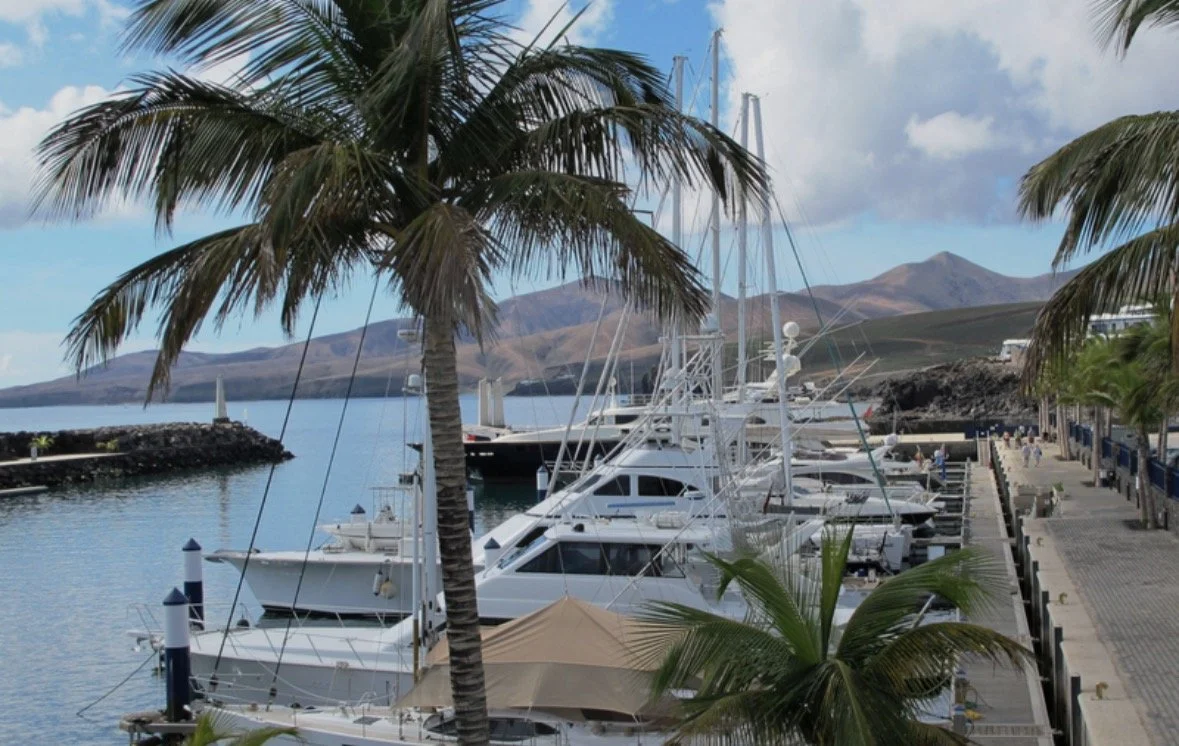
Puerto Calero Marina, our home for now
How some Italians are ditching Il Bel Paese for a tropical paradise— is it paying off?
If you talk to a lot of Italians, especially those in the hospitality business, they are in trouble. Tourism is booming, but there are dual problems of overtourism, and the inability to find staff who are truly invested in the hospitality vocation. I say vocation because it is more than a job. It takes a lot of passion to work the grueling hours, often with temporary and seasonal positions, practically no tips (in Italy, anyway), and a non-existent the work/life balance.
Many Italians have said “enough”, and have left their country for greener pastures.
I find myself on my boat in Porto Calero, a peaceful marina just south of the tourist havens of Arrecife and Puerto del Carmen. It’s here that I found some Italians in hospitality— running a pub, a restaurant, and gelato shop— willing to tell me their stories.
Here goes!
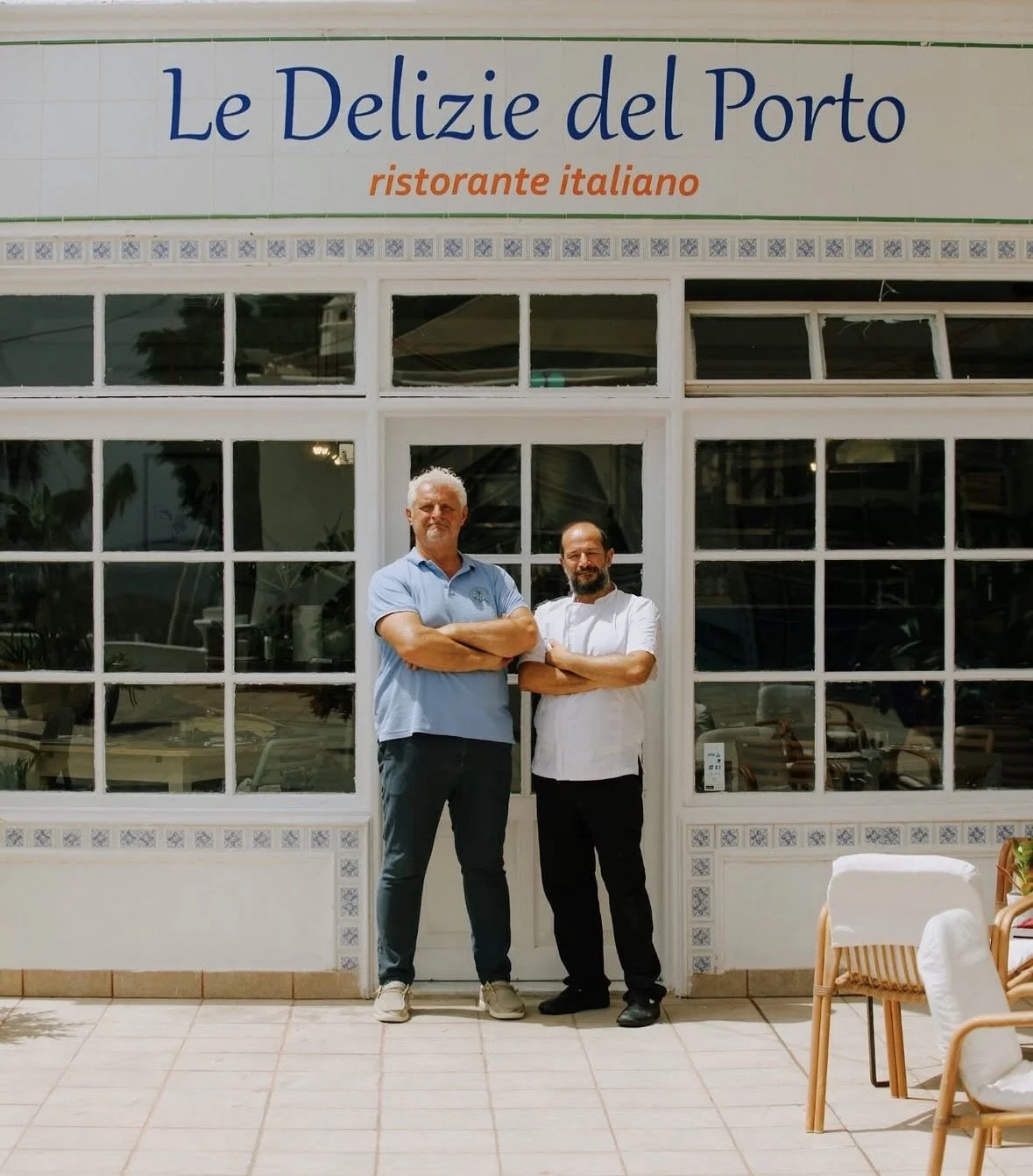
Desiderio and Chef Simone, the entire staff.
Le Delizie del Porto
Q: Can you introduce yourselves?
A: I'm Simone, chef at the restaurant Le Delizie del Porto. We're both from Bevagna, Umbria, and now live in Lanzarote. I'm Desiderio — I run the dining room and outdoor area.
Q: Why did you move to Lanzarote?
A: After years of coming here on vacation, we wanted a place with good weather year-round and a slower, calmer pace of life, with happy locals and tourists alike. Bringing authentic Italian cuisine abroad is something we've always loved — we've done private dinners in the US (Washington, New York, San Francisco, Miami, Orlando) for 18 years. We want people to understand Italian cooking isn't just pizza and ravioli — it has a thousand facets that change from north to south. It's not easy, since most people abroad associate Italian restaurants with pizza and tiramisù, and cuisine gets adapted for foreign tastes. We're trying to push back on that and share an authentic gastronomic culture.
Q: Why Puerto Calero specifically?
A: It's the hidden gem of Lanzarote — quiet, relaxed, elegant, not chasing notoriety or wild nightlife. It's a place where people can enjoy the 'slow food' philosophy we've championed for years.
Q: How many people can you serve?
A: Working with just the two of us, we never serve more than 12–13 people per seating. We work mainly by reservation; if tables are full, guests can wait with a glass of wine in the lounge or book another day.
Q: What's your signature dish?
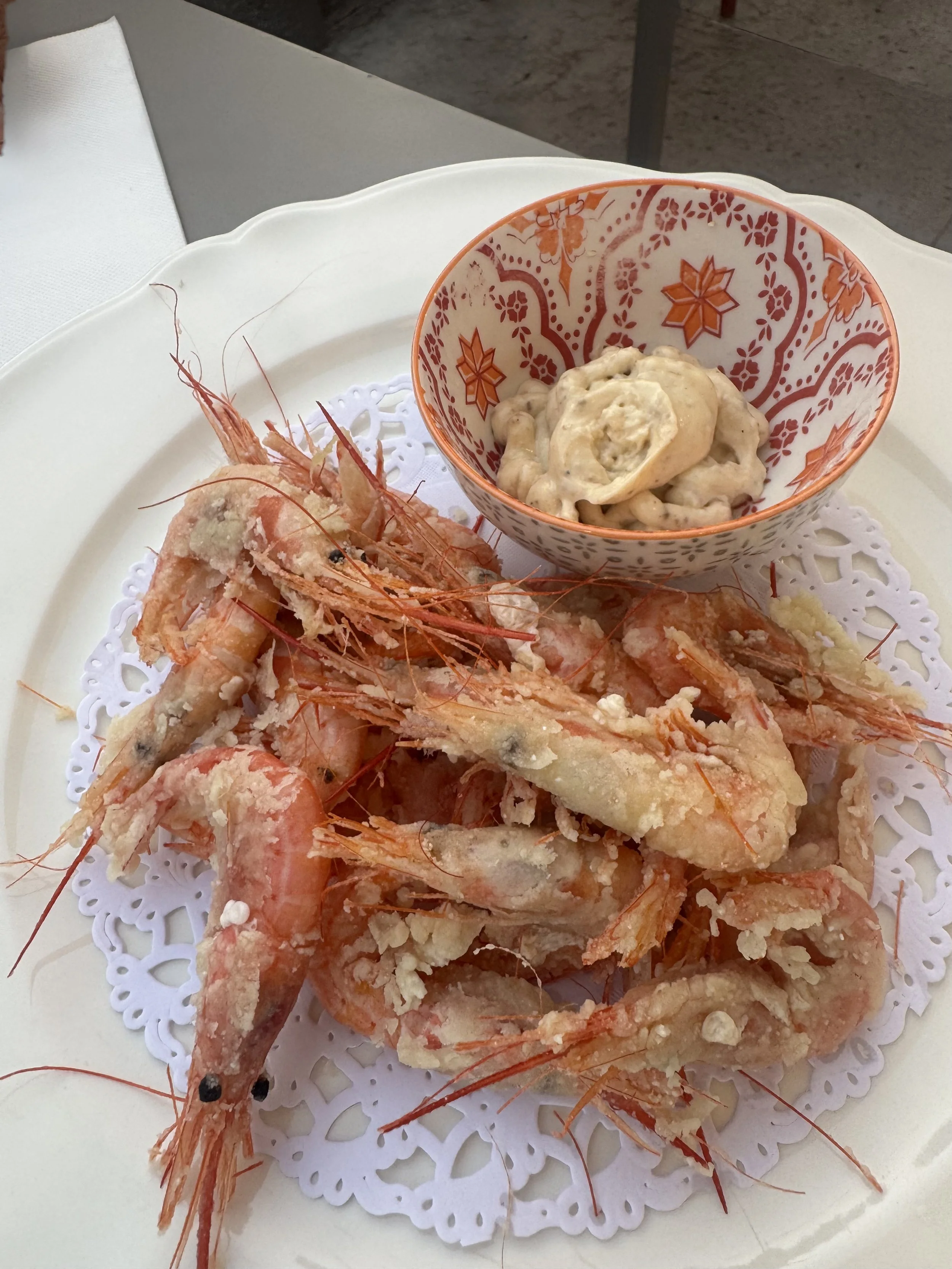
We tried the shrimp appetiser … amazingly good!
A: We love building dishes from raw ingredients — we make our own fresh pasta, bread, rolls, focaccia, breadsticks, and desserts. About 90% of our sourcing is local to Lanzarote; the only Italian imports are Parmigiano Reggiano and fresh truffle. We work with local fishermen and farms. Our menu leans more toward fish than meat, since good meat is harder to source reliably here.
Q: What's an example of a pasta dish with fish?
A: Hand-made tagliolini cooked 'acqua pazza' style with cherry tomatoes and olives, or with seafood or fresh squid when available — we love local carabineros and Santa prawns when we can find them.
Q: Are the local tomatoes as good as Italian ones?
A: Lanzarote is a 'blessed island' — the soil is barely exploited, so almost anything planted grows well. If you buy from suppliers who select good-quality seed lines, the produce is excellent.
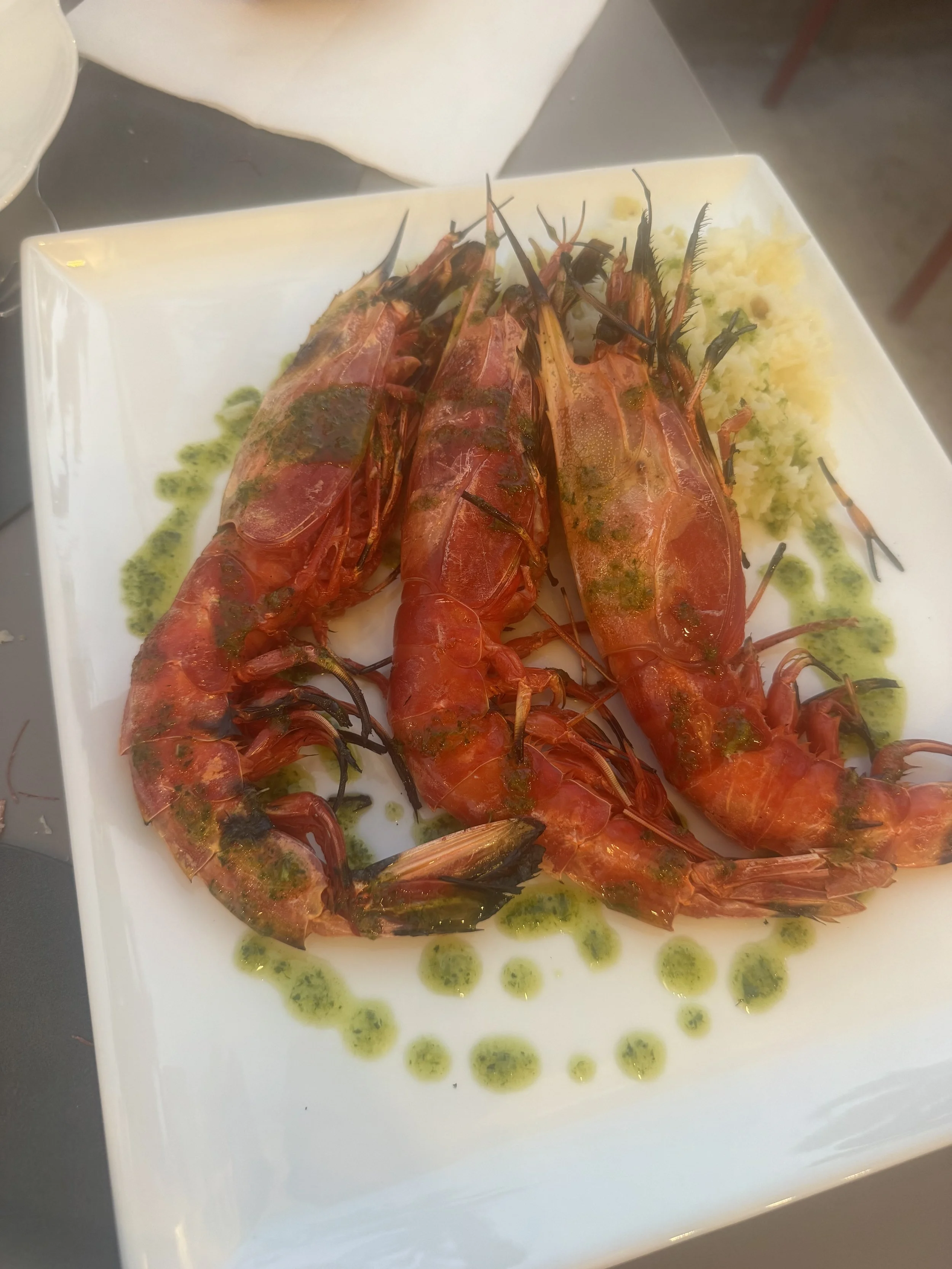
Enormous locally sourced grilled carabineros, so good!
Q: You've been open just a year — what's the biggest satisfaction so far?
A: Everything happened so fast. We kept saying 'maybe one day,' and once everything aligned, we moved quickly: signed the lease in March, settled in by August. The biggest satisfaction is seeing both residents and vacationers treat the restaurant like their neighborhood spot — the place they return to every time they're back on holiday. Many say they normally avoid 'Italian' restaurants abroad because they don't feel authentic, but ours does. Our whole project is about teaching, gently, what real Italian food is — without being aggressive when someone asks for a dish that isn't actually Italian.
Q: How long have you two been together?
A: 18 years — married for 5, in Italy. Same-sex marriage only recently became legal there, much later than in other countries, and the law still isn't perfect. We hope Italy becomes more open and progressive, more like Spain, which is led by a president we see as very enlightened and committed to equal rights.
Q: Are you open year-round?
A: Yes, except May, when we travel to the US for our private dinner circuit.
Q: Tell us about the May dinners in the US.
A: They're part of a circuit of longtime clients. It began almost as a joke with American friends who ran incoming tourism (food & wine tours) in Umbria — we did cooking shows to promote it, then started hosting dinners and building a mailing list that grew over the years. We keep groups small (max 10–12) to preserve the personal touch, sourcing local ingredients (plus truffle) and also do some dinners in London. We used to travel three months a year from Italy; now we keep it to May out of affection for the routine and to see family there.
Q: What did you do when you were in Italy?
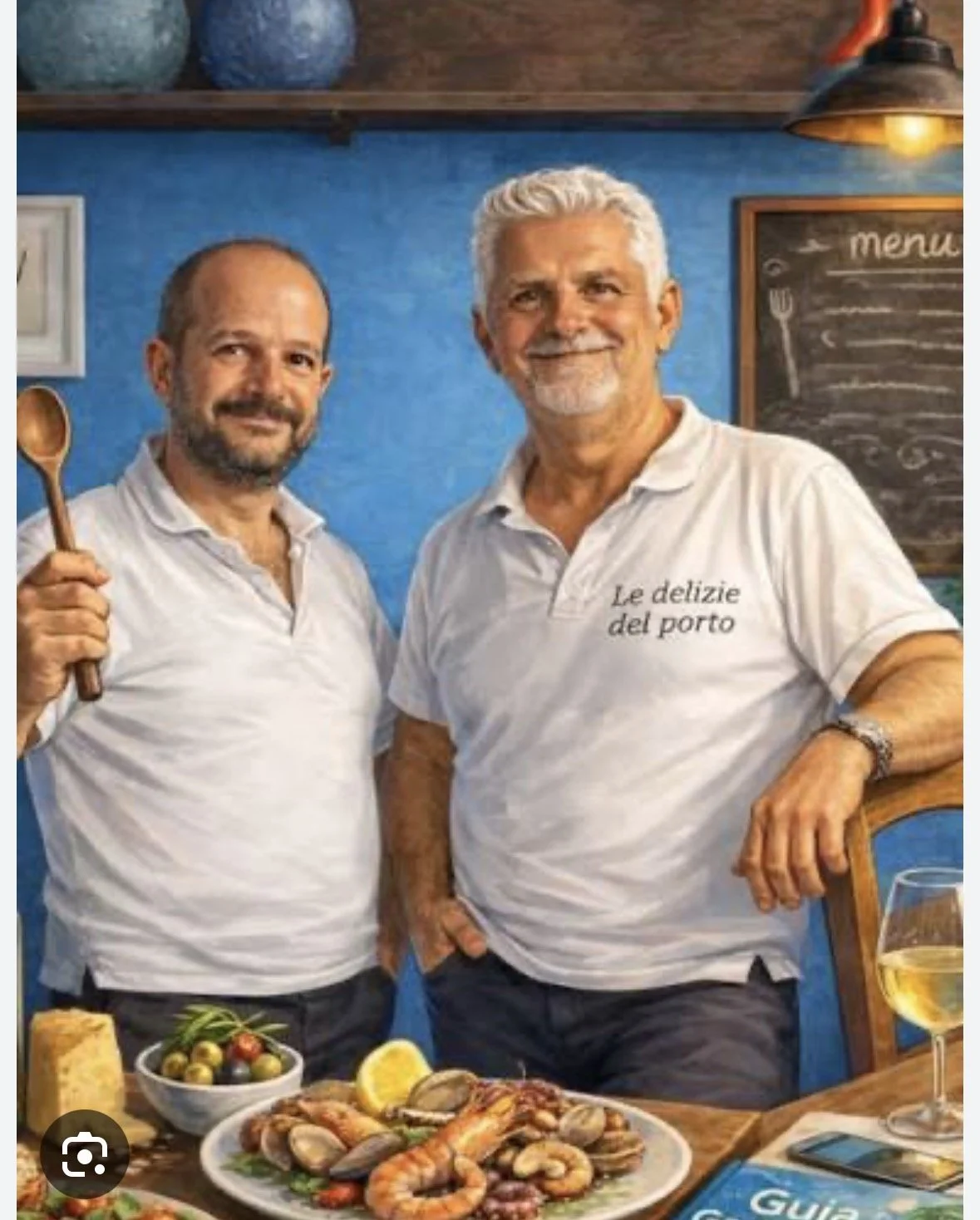
A cool rendering of the dynamic duo
A: We had restaurants in Italy for 25 years — we sold everything (house, restaurants) before this move. We were lucky to find a home here that suited us and chose it as our destination,
Q: Have you considered adding hospitality, like a B&B?
A: In Italy we also run an agriturismo/villa rental, so hospitality interests us. What worries us about expanding here is losing the personal connection with guests — our current small scale lets us pamper people. Spreading two people across three businesses in Italy created chaos; it was a great, rewarding chapter, but everything has an end, and the smart thing is knowing when to stop.
Q: Last question — where do you see yourselves in five years?
A: Definitely still here in Lanzarote — perhaps with a small boutique hotel, four rooms, breakfast and dinner downstairs. Hospitality is in our blood!
Links:
The Upper Deck Pub
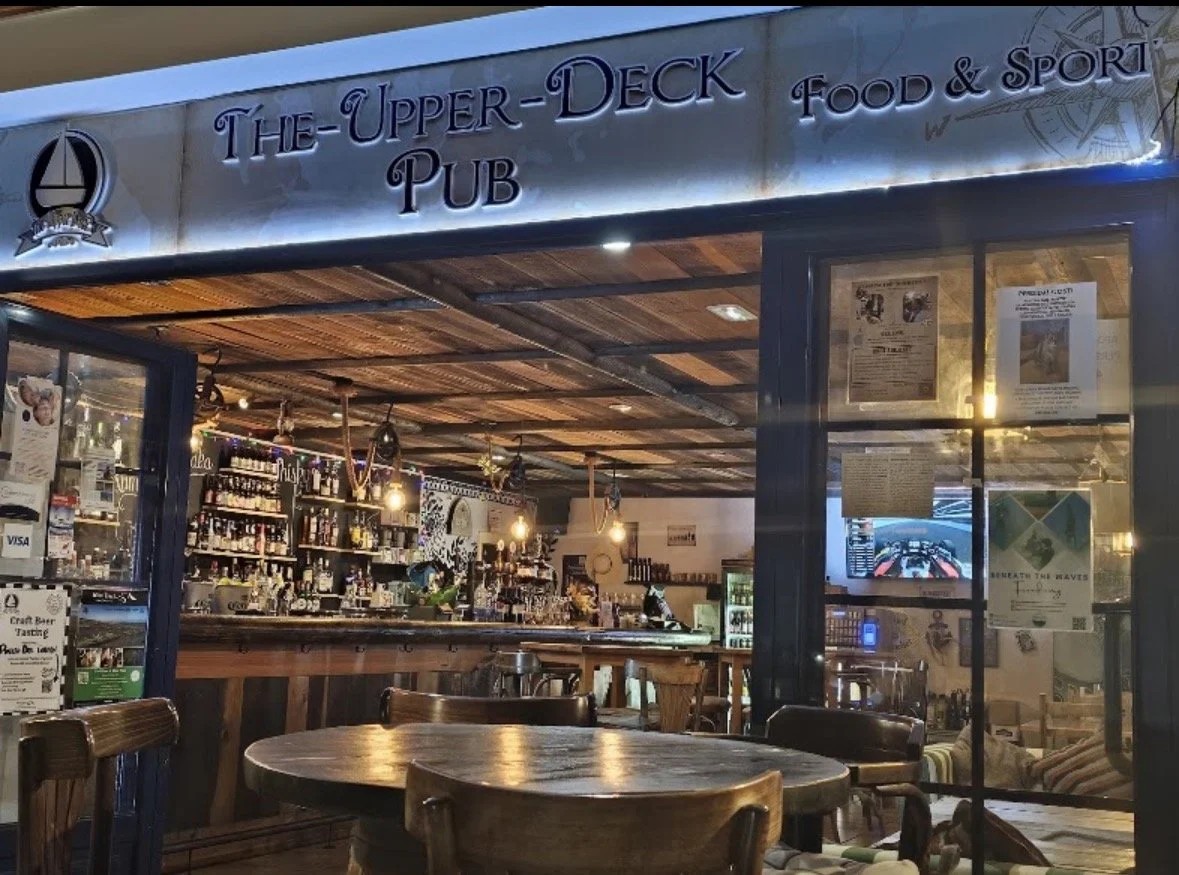
The inside of the pub
I interviewed Andrea, Roberto and Paolo, the three Italian partners of this popular pub in Puerto Calero
Q: Where are you from, and why Lanzarote?
Andrea: I’m from the Vicenza area. More than 23 years ago I came with a friend who'd vacationed here before. I wanted a change of life, arrived with him, and never left. I drove over in a camper van, leaving Italy with nothing — no job, no home, pure adventure. I sold what little I had back in Italy and left.
Roberto: I’m from the Campania region; I used to come on vacation with my wife, then I fell in love with the island, and we decided to move here.
Paolo: I'm from Vicenza. I've been here permanently since COVID, spring 2020. Before that I came one week a month, since I was a lawyer in Italy and only a partner in the bar part-time. COVID trapped me here for five months when flights stopped. I was alone either way, so I stayed. My Italian partners had already started taking over my cases before that, which made it easier.
Q: Why Lanzarote specifically?
Paolo: I started visiting the Canary Islands around 2003, tried Lanzarote over Fuerteventura in 2012, and liked this area enough to buy a house — helped by the post-2008 crisis, when half the local businesses were closed and prices were low.
Q: You are three partners in the business — did you start together or separately?
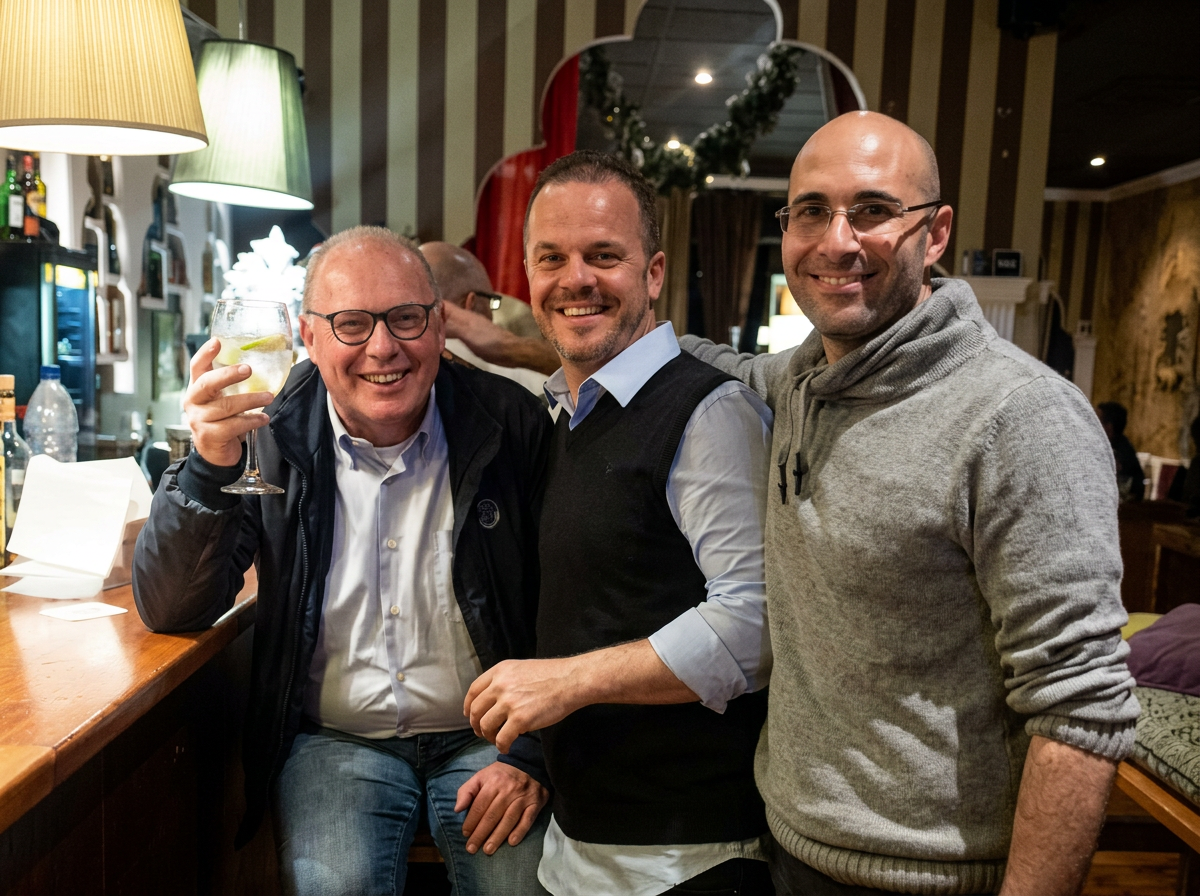
The three collaborated at Casablanca bar, now closed.
Andrea: Roberto and I worked together for years at another bar nearby. Paolo used to come here on vacation as a customer, became a close friend — like family — and the three of us opened this place together.
Paolo: I met them as a customer at a bar called Casablanca. I got to know Andrea especially — we lived in the same neighborhood here, and we were both originally from Veneto. I had no experience — I only did it because I knew them. Roberto and Andrea needed a partner so I said “si”: I learned as I went.
Q: Why choose to open a pub?
Andrea: Puerto Calero was missing a place with a proper beer selection — nowhere on Lanzarote really had that — so we decided to focus on beer and build a pub around it. The original plan was not to serve food, but people wanted it, especially the burgers, and it’s been successful.
Q: The food isn't especially Italian — why that choice?
Andrea: We wanted an Irish/English-style pub, and most of our customers are British, so the menu is geared more toward them than toward Italian cuisine.
Q: What did you bring from Italy to the pub?
Roberto: From Italy, we all bring the culture of hospitality. Maybe we just put a bit more love into it.
Q: How many beers do you carry?
Andrea: Around a hundred, according to the time of year —depending on what we can source, since finding beer here isn't always easy.
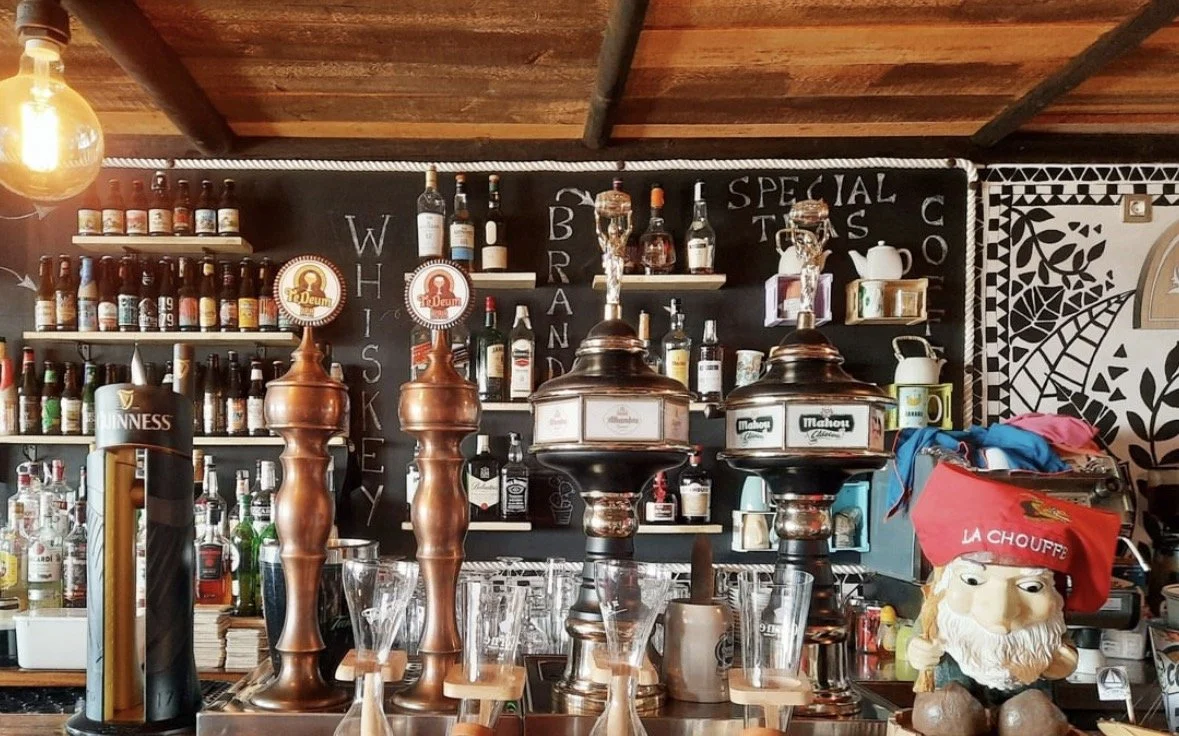
A huge selection of beers
Q: Tell me about a local beer you really like.
Andrea: We carry several Lanzarote beers. I particularly like Marinera, and Fresca, a session IPA from another local Lanzarote brewery — both on tap, depending on the day.
Roberto: I have simple tastes--give me a normal Mahon lager any time.
Q: You have a lot of British customers — how different are they from Italian customers?
Andrea: About 80–85% of our clientele is English, Irish, Scottish, or Welsh. I really enjoy working with British customers because on holiday they want to relax, have a good time, and they like to drink (laughs).
Q: What's the biggest satisfaction of living and working here?
Andrea: The quality of life — something we could only dream of in Italy. Waking up to sunshine every day makes you feel better. Running a business still brings stress and responsibility, but it's a fraction of what it would be in Italy, where starting a business is also far more complicated.
Q: Was it difficult to open a business here in the Canary Islands?
Roberto: No, not more difficult than other places. There are fewer regulations. It's not difficult in Italy either — there are just more regulations, more taxes, it's harder to survive in Italy.
Q: Does anything carry over from your old profession?
Paolo: Just a little, for interpreting the legal-eze. Other than that, I deliberately let it go — I was stressed.
Q: Is it stress-free now?
Paolo: Some stress remains, but I work least of the three partners — two to four days a week.
Q: Do you have a family?
Paolo: I’m the last bachelor, but now I have a partner of about three years, she’s from Cuba. We speak Spanish at home. And we just adopted Peppina, a red-headed miniture poodle
Q: What message would you give to Italians who want to come live here?
Roberto: For now, it's still good. But things are changing a bit here too — it's not the paradise it was thought to be a while back. A lot of Italians come here thinking it’s easy work, low taxes, everything's cheap, good weather all year round. The reality is, you have to work wherever you go, but I’m still here, so that means something.
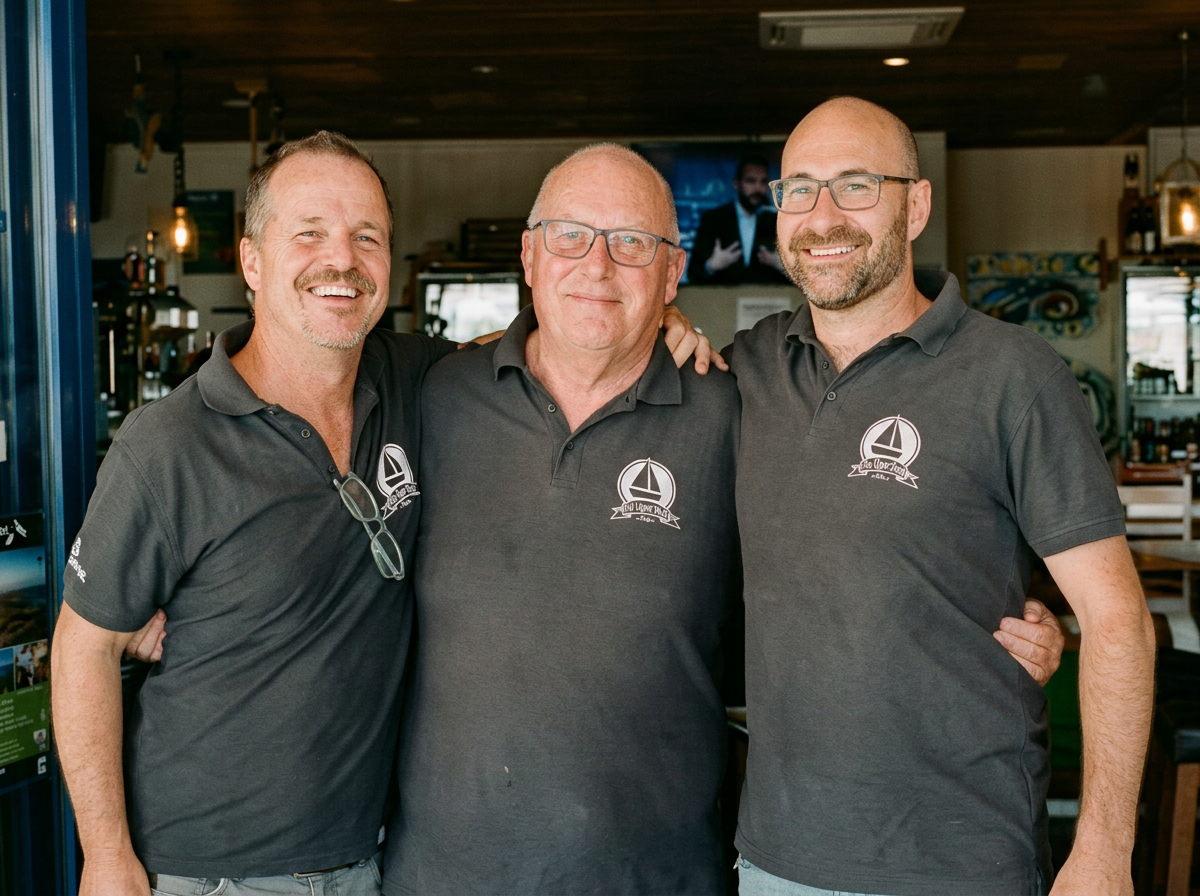
A more recent picture of partners Andrea, Paolo and Roberto
Q: Where do you see yourself in five years?
Roberto: I think I’ll still be here. We call it home.
Andrea: God willing, either still here running our place, or off enjoying life somewhere with my partner — depends. You never really know, but the itch for adventure is always there.
Paolo: I see myself here with my little Spanish-speaking family, but Peppina is going to learn Italian too!
Links
Clara Gelato Artesano
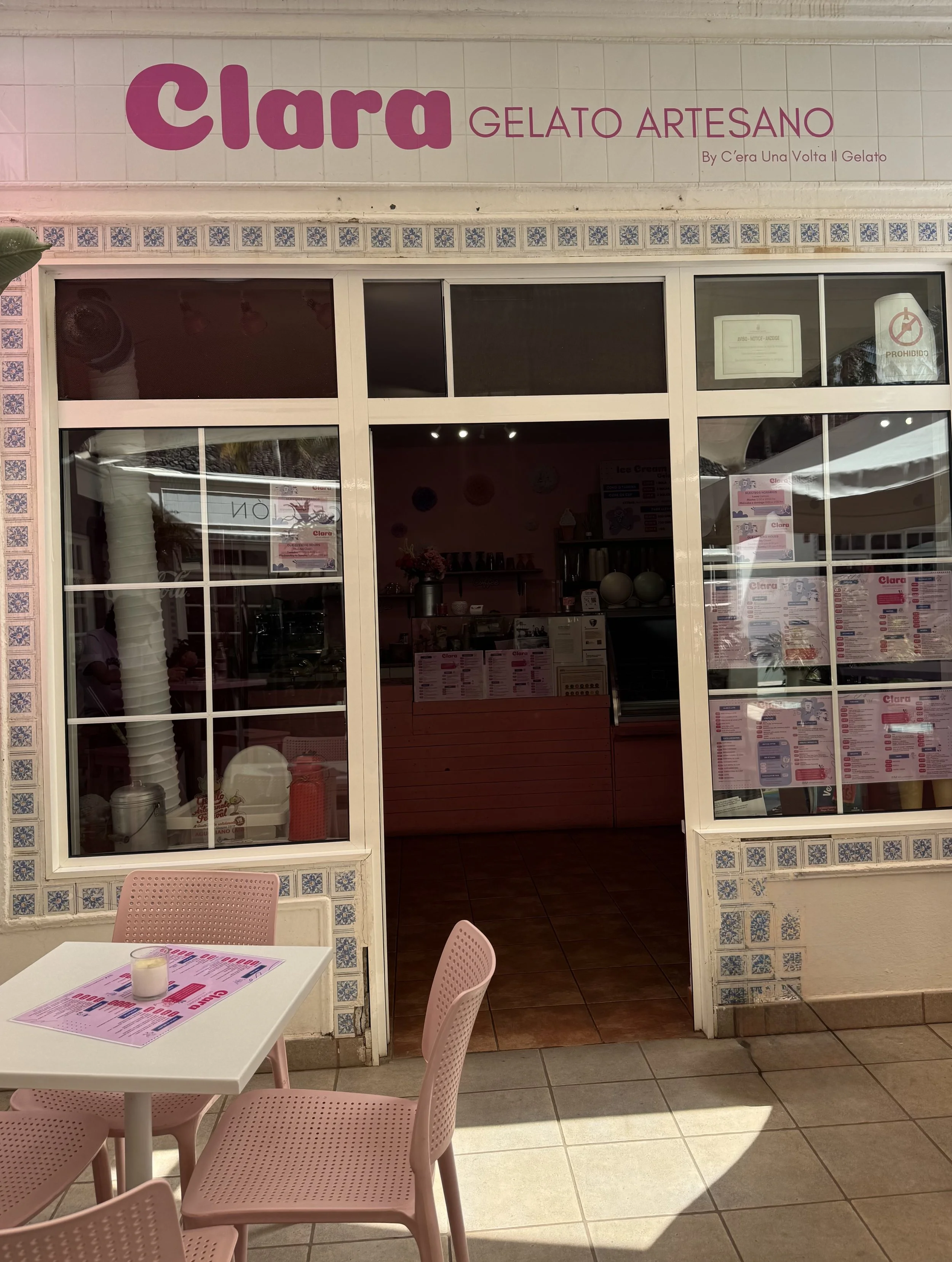
The best gelato in Puerto Calero
Q: Tell me your name, where you're from, and your partner's too.
A: My name is Veronica and I'm from Como. My husband is Davide, and he's from the province of Varese, from Fagnano Olona.
Q: How long ago did you move here?
A: We moved here to Lanzarote four and a half years ago.
Q: Why here?
A: We came on vacation and loved Lanzarote so much. Also, I have a small health issue — juvenile rheumatoid arthritis that was diagnosed when I was 14 — and the air here is a bit drier. Where I'm from it rains often, so I decided to move here. I feel much better here, in my joints and bones.
Q: And then your daughter was born?
A: Yes, our little girl arrived — she's two and a half now. Her name is Clara.
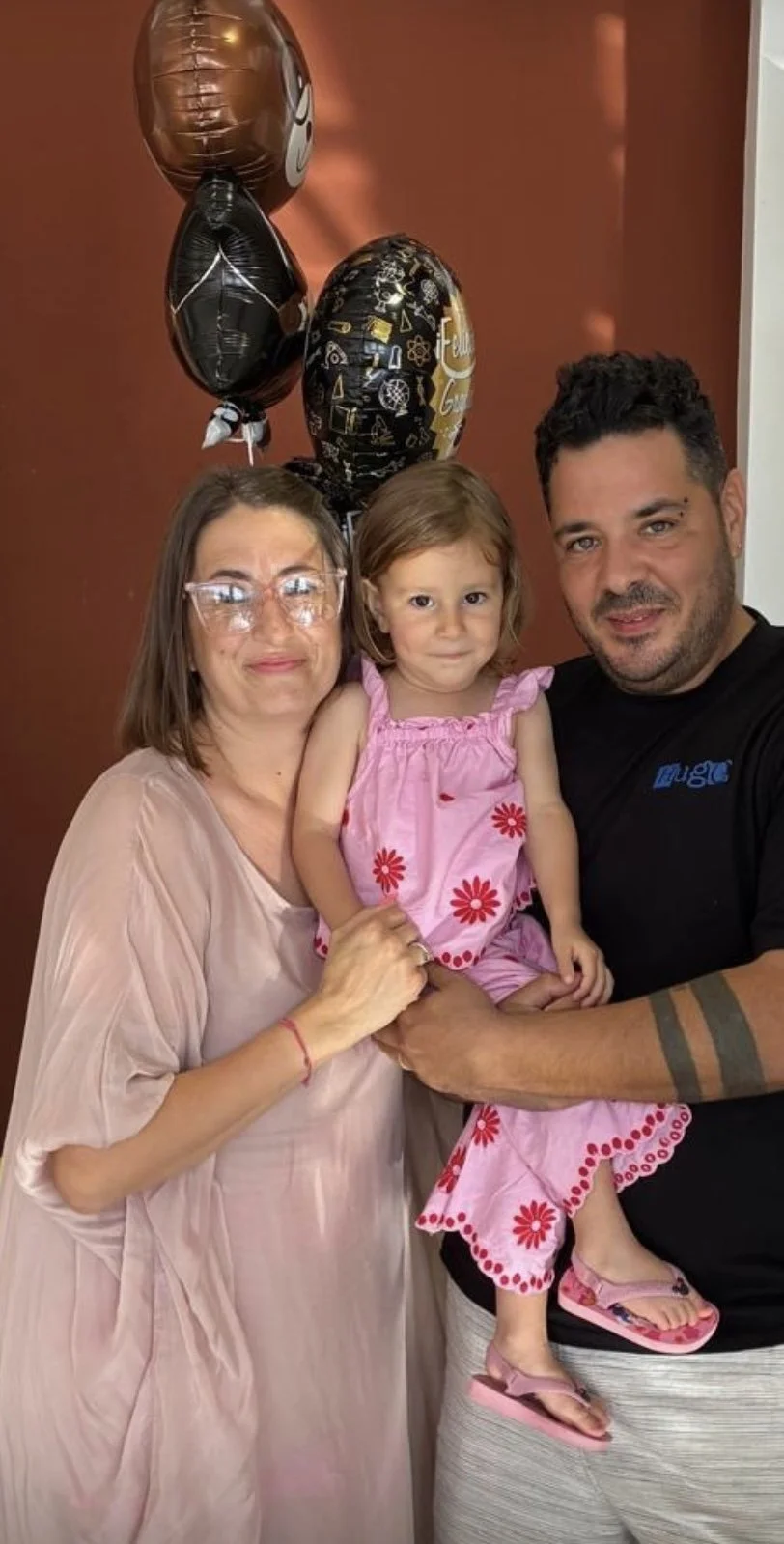
Veronica Davide and Clara
Q: So that's why Clara is everywhere in the branding?
A: Yes, exactly, that's why. Everything we do is for her.
Q: How long ago did you open the gelateria?
A: Four and a half years now, but we opened it soon after arriving. We arrived in January and opened in April.
Q: What kind of work did you do back home?
A: We always had a gelateria. We trained for six years, my husband and I, working at a gelateria before making the move.
Q: Were you already planning to relocate?
A: Kind of — we already had the idea of moving, but COVID delayed us by a year. We had to stay a year longer than planned, and that's when we decided to pack everything up and come here.
Q: Tell me a bit about your gelato — how do you make it?
A: We use old-fashioned recipes. My husband creates each flavor himself — we don't use pre-made bases, he makes everything from scratch. For milk-based gelato we use milk, milk powder, sugar, and neutro (the stabilizer that holds the gelato together), then we add the flavor.
Q: Do you use local island products, like fruit?
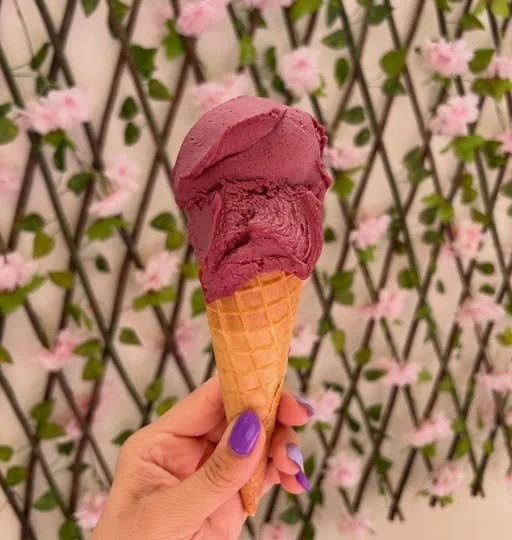
A: Mainly fruit, yes — we use a lot of it. We make dragon fruit ("pitahaya," the one with the black seeds), melon, watermelon. All the fruit we get from a local island supplier. We source our pistachio and hazelnut from Italy. We also work with a local farm ("finca") here for goat's milk and cow's milk gelato.
Q: So people with intolerances can eat it too?
A: Absolutely — all our fruit flavors and dark chocolate are lactose-free and vegan too.
Q: What's the customer response been like?
A: We have about 80% residents and 20% tourists. We have a lot of regular residents, and they're thrilled with the gelato because it's genuinely good, artisanal — and artisanal quality always pays off in the end.
Q: How long does it take to make a batch of gelato?
A: For one flavor, my husband does it in about 10 minutes because he preps everything daily beforehand — pasteurizing for the cream bases, prepping the fruit. For a full display case, it takes him about four and a half hours.
Q: How often does he make gelato?
A: Every two days. In high season we go through 24 flavors; in low season it shrinks to 16.
Q: What's the best-selling flavor?
A: Sicilian pistachio is the top seller. Everything sells well, but pistachio is the most popular right now.
Q: What's the biggest order you've ever had?
A: Tubs to take away. For someone eating on the spot, the biggest is the cone with three flavors on a large waffle cone, compared to the smaller size.
Q: Do you have regulars who come every day?
A: Yes, definitely — repeat customers, especially those who live here in Puerto Calero with their kids, or people coming from sports or a day at the beach.
Q: Is "gelato time" different here than in Italy?
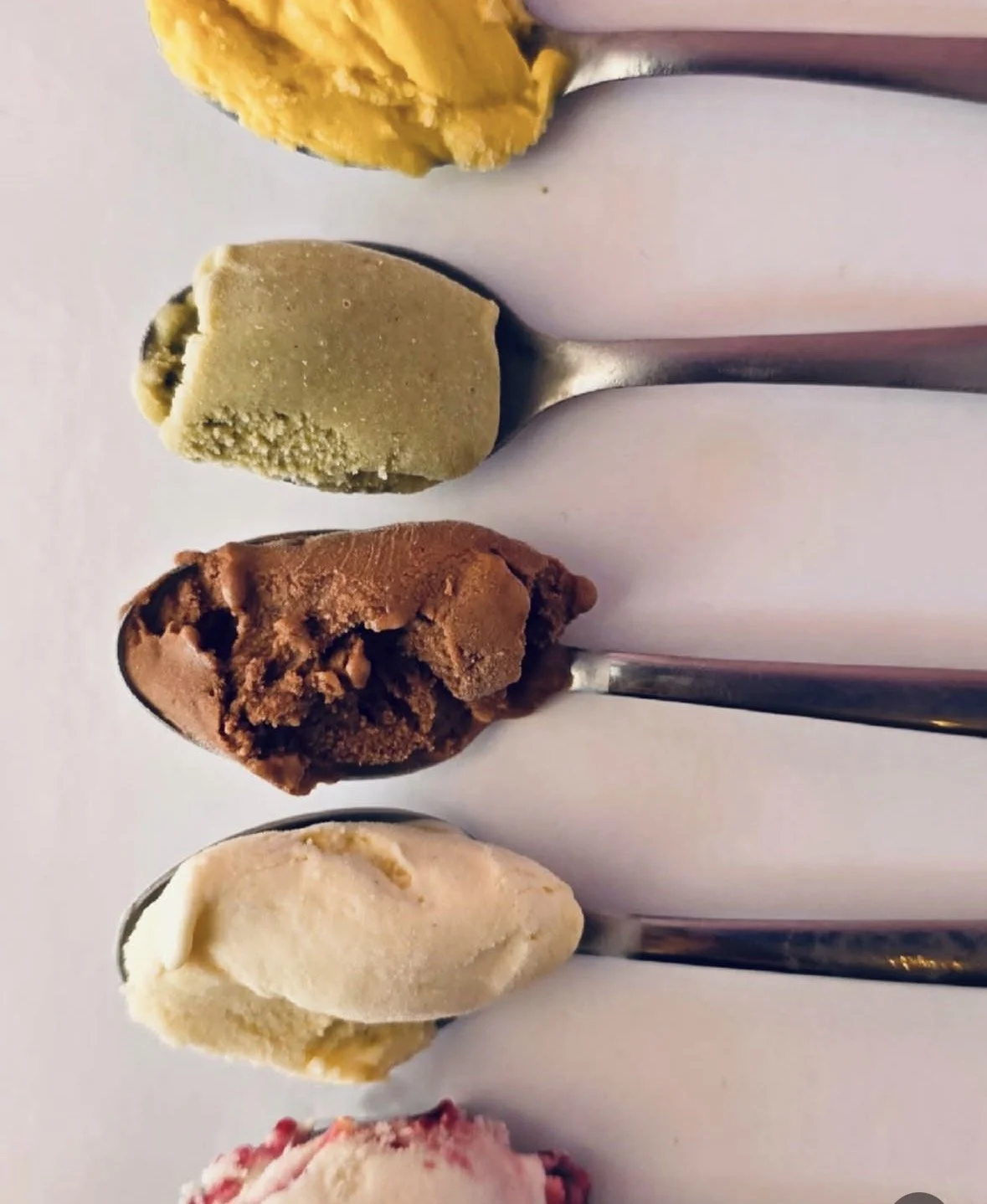
So many flavors….
A: Very different from what you'd expect in Italy. Here people start eating gelato from the morning. In Italy it's more afternoon into evening. Here, since it's warm almost year-round, people sit down to eat gelato at 7 or 8 in the evening — which would be unthinkable back home. They come around 9 pm too, because dinner here is very late, so they eat gelato before dinner. Seeing people eat gelato at 7 pm here, you think — yes, it's true, it really happens.
Q: Have you made any unusual experimental flavors?
A: Yes, quite a few — we did more of them in Italy, maybe because it leaned more toward gourmet gelato there, but we do them here too. Flavors that recall a Canarian breakfast or snack: banana, gofio (Canarian toasted grain), and "ropa vieja" — an old-style flavor, as our customers described it. We also make one I ate as a child that people here love: bread, butter and jam. We do lemon-basil, which is a bit unusual for a fruit flavor, and dark chocolate with salt. For cream-based flavors, we make goat cheese gelato with blueberry jam. We make so many that — aside from the basics — my husband is always switching things up and never keeps the same flavors.
Q: When it was just the gelateria, you were up front and he was in the back?
A: Yes, exactly. Then a young woman started helping us, both there and here, and now we've become a bit of a bigger family.
Q: When did you open your second location which is a coffee shop and bistrot?
A: Last year, September 9th —soon we’ll celebrate one year of Clara Bistrot.
Q: Why did you decide to open another business?
A: We wanted to create something dedicated to my daughter. We unified the brand — the gelateria used to have a different name, and now we wanted to make everything one cohesive thing. People also want something different nowadays, and I loved decorating the place in the color pink — I think it shows! It also feels calming, welcoming for families, and appeals to everyone regardless of gender when they walk in. It's a color that brings joy.
Q: And why a bistrot?
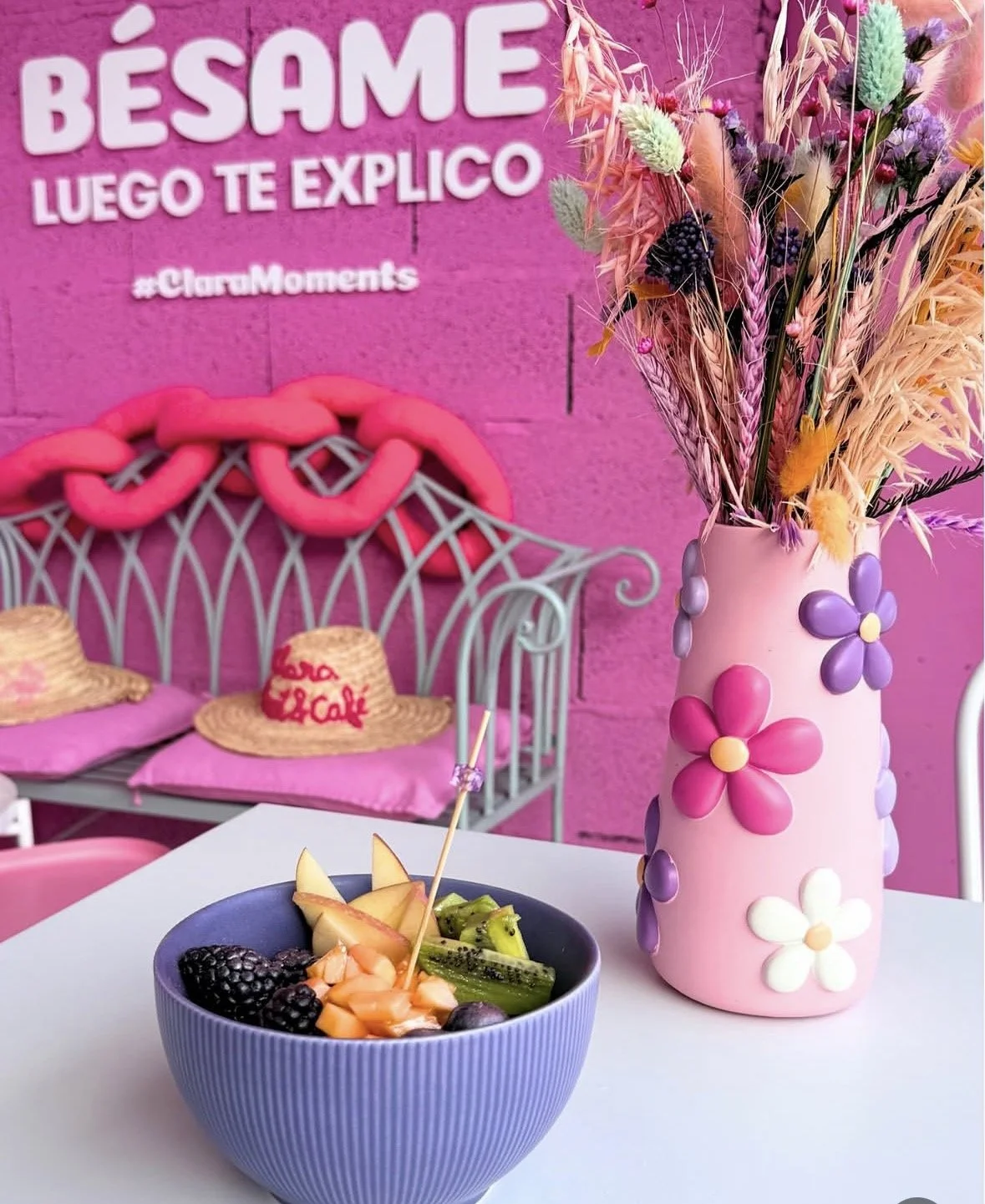
Clara Bistrot Cafe all decked out in pink
A: Davide was actually a chef before becoming a gelato maker, so he wanted to go back to doing a bit of that too — though his real passion is still making gelato.
Q: What do you serve here besides sandwiches?
A: We make toasted sandwiches, lasagna, salads for people who want something lighter and quicker for lunch. My husband makes our own brioche bread for the toasts — he bakes it himself, and that's what we use.
Q: Let's talk about collaborations — we ate at Le Delizie del Porto last night.
A: Ah yes, Simone and Desiderio, friends of ours.
Q: Your gelato is on the dessert menu there — how did that collaboration start?
A: We met at a restaurant and became friends immediately because they're both wonderful people. Since they always came to eat our gelato, they told us: the day we open our own place here, we want to collaborate, we want your gelato. And that's exactly what happened — they kept their promise and the collaboration began.
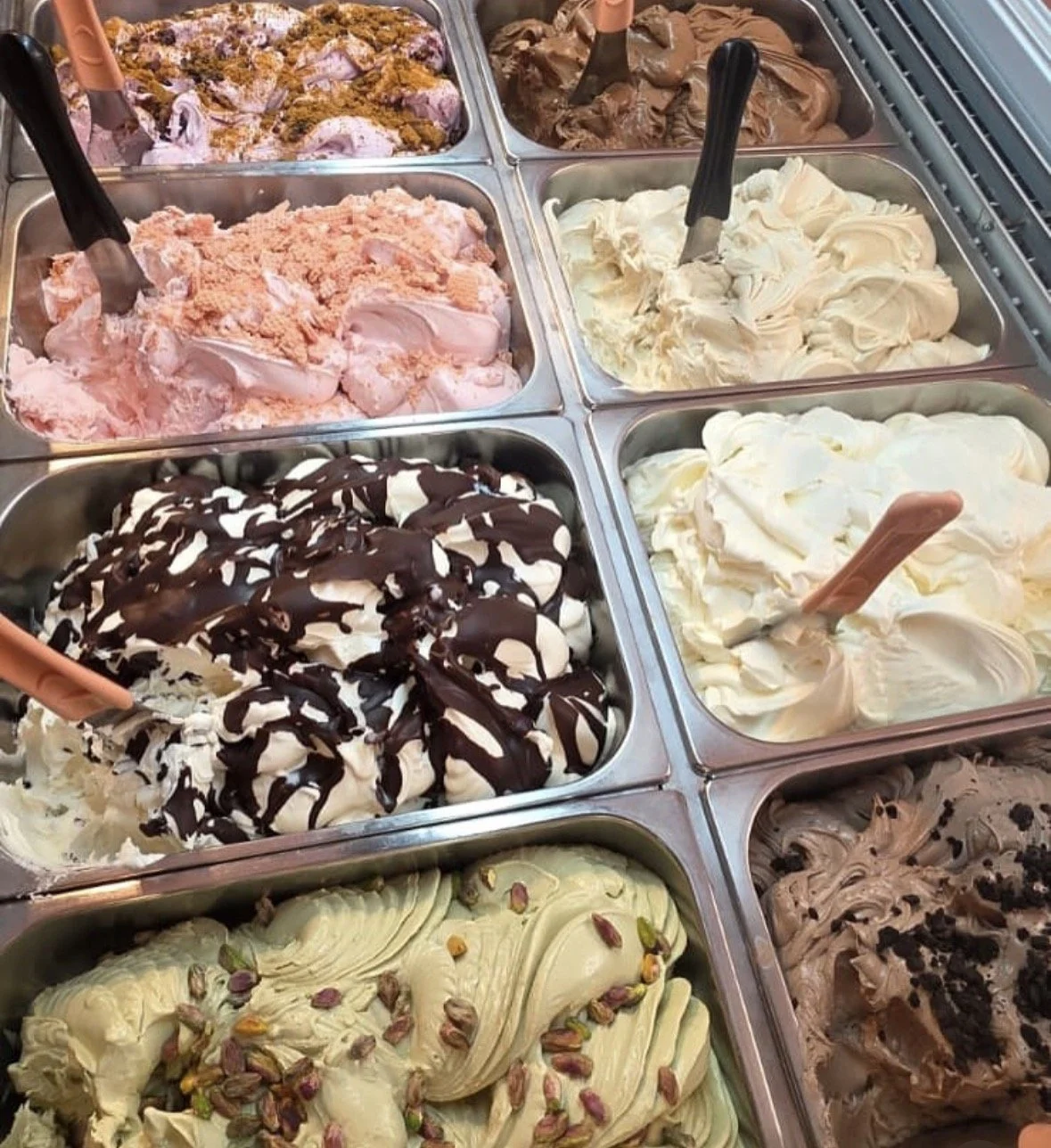
Ready to serve
Q: Did you know them before moving here?
A: No, not at all — we met after we'd already opened the gelateria. They used to come once or twice a year on vacation, and we became friends that way. They said they wanted to open something here too, a bit tired of Italy for reasons we understand very well. So, they moved here, and now they're also approaching their one-year mark, just like our bistro.
Q: What gives you the most satisfaction about living here?
A: The climate, the people, the tranquility. Raising Clara here in the open air, with less crime than in Italy, where you hear about danger every day — I'm so happy she's growing up here, having her childhood here.
Q: Is Clara in preschool already?
A: She's in nursery school, and she'll start regular school soon.
Q: Does she already speak Spanish?
A: Yes, she speaks Spanish and Italian —perfectly bilingual. She'll start learning English too once she's in school, so I'm thrilled about that.
Q: Does she feel more Canarian or Italian?
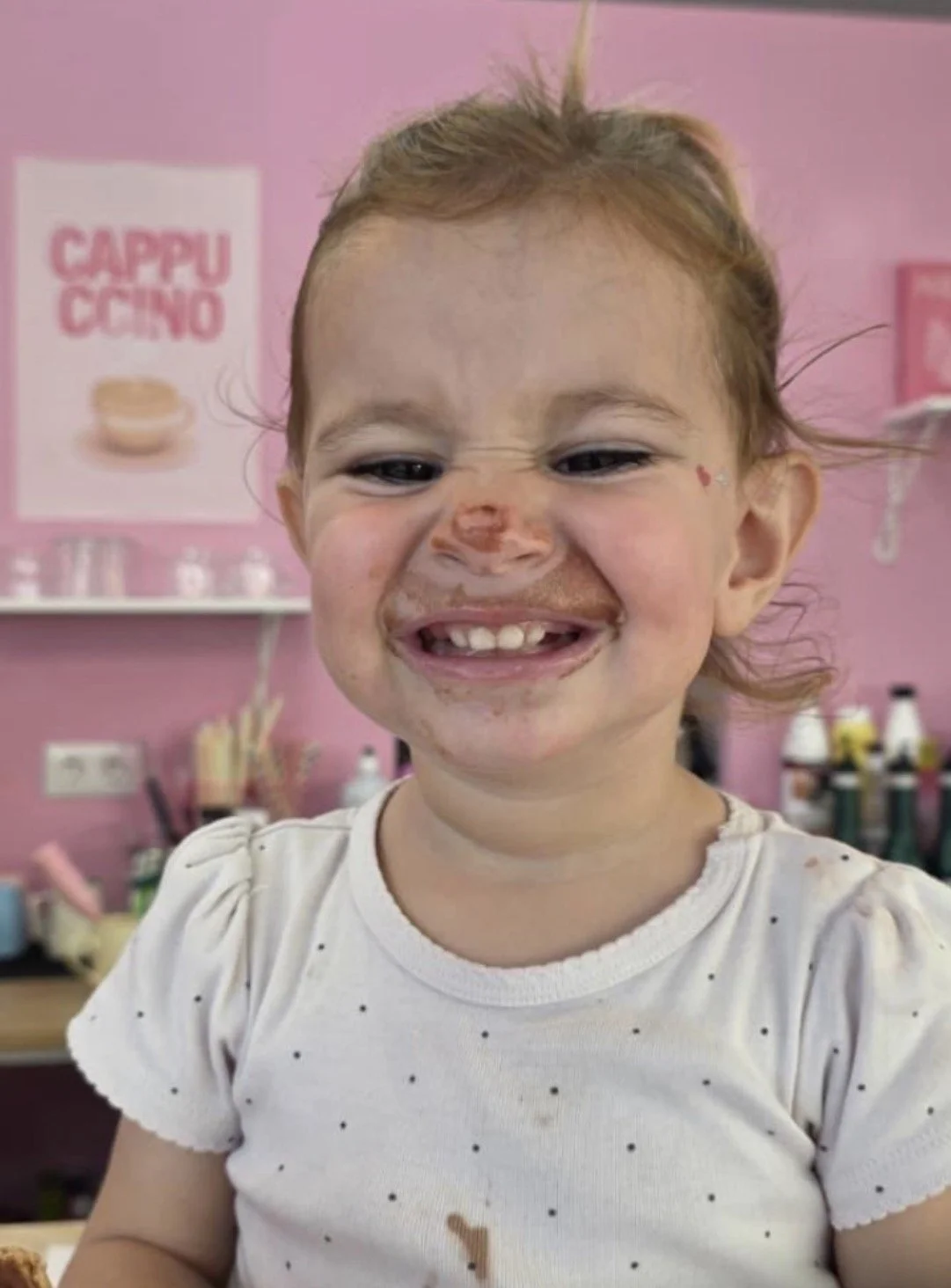
Clara finds Daddy’s gelato irresistable!
A: No, she really feels Canarian — "conejera," as they say here (someone from Lanzarote). You can see it in how she acts, how she thinks.
Q: Where do you see yourself in five years?
A: Here, definitely. We've decided Puerto Calero suits us — the tranquility, the people, both residents and tourists. It attracts a nice crowd, quite well-off and very sociable, people who return again and again. There are a lot of vacation homes here too — people who visit two or three times a year and have essentially become residents, even though they officially live elsewhere.
Q: Are there many Italians here? What other nationalities do you get?
A: Not too many Italians. Mostly British and Irish. Also, some French, Germans, and yes, a few Italians too, though I always joke there are fewer, since we tend to recognize each other everywhere.
Q: Last question — what's Clara's favorite gelato flavor?
A: Clara's is pistachio — just like her dad. Though she eats a bit of everything, really. When her dad is making gelato, she stands right next to the machine with a spoon, waiting to eat it fresh. She has a real sweet tooth — for gelato and pretty much all desserts. Clara is our future… in more ways than one!
Links
These Italians left Italy with a sense of adventure and the drive to show the world what true Italian hospitality means. Gracias!